




Potassium
Potassium steers the water balance and pushes the sugar out of the leaf into the fruit. It is also the strongest antagonist of calcium and magnesium — with potassium the ratio decides, not the single value.
Matching fertiliser
All prices incl. VAT, ex works Ruswil.
What potassium does in the plant
The three jobs that decide something in the field.
Water balance
Potassium opens and closes the stomata. Well supplied crop stands cope better with drought, because they can steer evaporation.
Assimilate transport
Sugar only moves out of the leaf into fruit, tuber or root with potassium. Without potassium the output stays stuck in the leaf.
Enzymes
More than fifty enzymes need potassium as an activator, among them those for starch formation. That explains the potassium demand in potatoes.
How potassium gets into the plant
From the soil to where it is needed.
Potassium is the most mobile cation in the plant — it pulls it back out of old leaves as soon as things get tight. That is why a shortage shows at the bottom, along the leaf margins. In the soil potassium sits between the clay minerals and is fixed in dry conditions. Clay-rich soils can therefore show high values and still let the plant go hungry.
How it reaches the root
Share of the three transport routes in uptake.
Three quarters through diffusion. Potassium travels only millimetres in the soil, root density makes the difference.
Reference values from the literature, maize as the model crop. The shares shift with soil, crop and moisture; the ranking stays.
What helps potassium uptake and what holds it back
When you correct something, the ratio almost always matters more than the single value.
Helps
Holds back
What you see in the leaf sap analysis
Four findings and what they mean.
What you see in the soil analysis
Which values actually tell you something here.
What compost tea contributes for potassium
The potassium in the soil sits for the most part in silicates — in mica, feldspar and clay. Available to the plant is a fraction of that. Bacteria break these lattices open, with organic acids and with the slime they form around themselves.
Who does the work in the compost tea
Potassium is therefore not only a question of amount. When the soil reserve is high and the leaf sap is still low, a look at the soil life pays off before the next application.
Whether potassium is really the bottleneck shows in the leaf sap analysis. Together with the soil analysis you see reserve and uptake side by side — and save yourself the application that brings nothing.
Calcium
With calcium the soil is almost never the problem. Calcium only travels with the transpiration stream — whatever does not evaporate gets none.
Matching fertiliser
All prices incl. VAT, ex works Ruswil.
What calcium does in the plant
The three jobs that decide something in the field.
Cell wall
Calcium cross-links the pectins in the middle lamella. That holds neighbouring cells together and decides firmness, storage life and how easily a fungus gets in.
Membrane
On the outside of the cell membrane calcium stabilises the phospholipids. Without it membranes become leaky and cell contents escape — that is the mechanism behind internal browning and bitter pit.
Signal
Inside the cell the plant keeps calcium extremely low. A brief rise is a signal — in cold, drought or fungal attack.
How calcium gets into the plant
From the soil to where it is needed.
Calcium travels upwards only. Once it is built into an old leaf, it never leaves again. So it is not the reserve in the soil that decides where it ends up, but the evaporation. Warm humid nights, dense crop stands and fast growth slow transpiration down exactly when the fruit needs most.
How it reaches the root
Share of the three transport routes in uptake.
Calcium comes with the transpiration stream, a good fifth through direct root interception. Diffusion plays no part, which is why watering helps more than spreading.
Reference values from the literature, maize as the model crop. The shares shift with soil, crop and moisture; the ranking stays.
What helps calcium uptake and what holds it back
When you correct something, the ratio almost always matters more than the single value.
Helps
Holds back
What you see in the leaf sap analysis
Four findings and what they mean.
What you see in the soil analysis
Which values actually tell you something here.
Whether calcium is really the bottleneck shows in the leaf sap analysis. Together with the soil analysis you see reserve and uptake side by side — and save yourself the application that brings nothing.
Magnesium
Magnesium sits at the centre of every chlorophyll molecule — without magnesium no photosynthesis. The shortage almost always comes from the potassium, not from the soil.
Matching fertiliser
All prices incl. VAT, ex works Ruswil.
MgMagnesium foliar fertiliser Carbo-Eco Mg10 litres · 5 % MgO · 10 % SO₃ · sh6110591.35incl. VAT
What magnesium does in the plant
The three jobs that decide something in the field.
Leaf pigment
Every chlorophyll molecule carries a magnesium atom at its centre. In deficiency the leaf pales between the veins, the veins themselves stay green.
Enzymes
Magnesium activates every enzyme that works with ATP. That affects energy balance, protein build-up and sugar distribution at the same time.
Assimilate transport
Without magnesium the sugar backs up in the leaf. Exactly that backlog damages the leaf further and deepens the paling.
How magnesium gets into the plant
From the soil to where it is needed.
Magnesium has no uptake route of its own and has to hold its ground against potassium and calcium. That is the whole reason magnesium deficiency is so common: potassium gets fertilised, magnesium does not, and the ratio tips. On light soils leaching comes on top — magnesium clings less tightly to the exchanger than calcium.
How it reaches the root
Share of the three transport routes in uptake.
Like calcium on the water stream, but less dependent on direct root interception.
Reference values from the literature, maize as the model crop. The shares shift with soil, crop and moisture; the ranking stays.
What helps magnesium uptake and what holds it back
When you correct something, the ratio almost always matters more than the single value.
Helps
Holds back
What you see in the leaf sap analysis
Four findings and what they mean.
What you see in the soil analysis
Which values actually tell you something here.
Whether magnesium is really the bottleneck shows in the leaf sap analysis. Together with the soil analysis you see reserve and uptake side by side — and save yourself the application that brings nothing.
Nitrogen
Nitrogen decides growth and protein build-up — and how susceptible a crop stand becomes. The amount is not the issue, the form is: nitrate, ammonium and amino acids act in completely different ways.
Matching fertiliser
All prices incl. VAT, ex works Ruswil.
NAmino acid foliar fertiliser Bio-Plantosol10 litres · plant-based amino acids · sh61111109.80incl. VATNNPK foliar fertiliser Bio-NPK 7-3-210 / 200 / 1000 litres · sh61112from 73.90incl. VAT
What nitrogen does in the plant
The three jobs that decide something in the field.
Protein
Nitrogen sits in every amino acid and therefore in every enzyme. When it runs short, the whole metabolism stalls, not just growth.
Chlorophyll
Four nitrogen atoms hold the magnesium in the leaf pigment. That is why nitrogen deficiency looks like magnesium deficiency — it only starts somewhere else.
Growth
Nitrate drives cell extension. Too much of it gives soft, thin-walled tissue that mildew and aphids get into easily.
How nitrogen gets into the plant
From the soil to where it is needed.
The plant takes nitrate up with the water stream and first has to reduce it in the leaf — that costs energy and needs molybdenum. Ammonium is quicker, but it acidifies the root zone and displaces calcium, magnesium and potassium. Amino acids from organic fertilising skip both steps. Their quantity is small though, they replace no base dressing.
How it reaches the root
Share of the three transport routes in uptake.
Almost all of it comes with the water stream. When transpiration stops, nitrogen uptake stops with it.
Reference values from the literature, maize as the model crop. The shares shift with soil, crop and moisture; the ranking stays.
What helps nitrogen uptake and what holds it back
When you correct something, the ratio almost always matters more than the single value.
Helps
Holds back
What you see in the leaf sap analysis
Four findings and what they mean.
What you see in the soil analysis
Which values actually tell you something here.
What compost tea contributes for nitrogen
The nitrogen in the humus sits in protein and in chitin. Two enzymes open it up: leucine aminopeptidase splits peptides, N-acetylglucosaminidase splits chitin. We had both measured in the compost tea.
Leucine aminopeptidase (LEU) — splits protein into amino acids
Mean of three batches · individual values 43.6 · 26.6 · 20.2. Digit Soil AG, Feasibility Study of 24.08.2026 · SEAR reader with a purpose-printed holder for liquid samples · three batches from the same brewing run.
Who does the work in the compost tea
Organically bound nitrogen is therefore not fertilised but opened up. That explains why the leaf sap on biologically active land stands more evenly across the season than after a single application.
Whether nitrogen is really the bottleneck shows in the leaf sap analysis. Together with the soil analysis you see reserve and uptake side by side — and save yourself the application that brings nothing.
Sulphur
Since the air has been clean, sulphur has been missing in the soil — and with it the effect of the nitrogen. Two of the twenty amino acids carry sulphur, without them nitrate stays unused.
Matching fertiliser
All prices incl. VAT, ex works Ruswil.
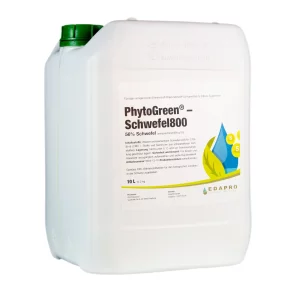
SSulphur foliar fertiliser PhytoGreen-Schwefel80010 litres · 800 g sulphur per litre · sh6110873.90incl. VATSMagnesium foliar fertiliser Carbo-Eco Mg10 litres · 10 % SO₃, that is around 4 % sulphur · plus 5 % MgO · sh6110591.35incl. VAT
What sulphur does in the plant
The three jobs that decide something in the field.
Amino acids
Cysteine and methionine contain sulphur. Without them the plant cannot turn the nitrate it has taken up into protein.
Defence compounds
Glucosinolates in oilseed rape and alliins in leek contain sulphur. Sulphur deficiency there means less self-defence and less aroma.
Enzymes
Sulphur bridges hold proteins in shape. That affects the enzymes of photosynthesis as well.
How sulphur gets into the plant
From the soil to where it is needed.
Sulphur behaves in the soil like nitrate: it is present as sulphate and leaches over winter. That is why the demand is greatest in spring and the reserve smallest. Because sulphur is barely remobilised within the plant, the shortage shows in the young leaf — unlike nitrogen, which pales from the bottom up.
How it reaches the root
Share of the three transport routes in uptake.
Sulphate runs along with the water, almost like nitrate. Uptake and leaching therefore hang on the same stream.
Reference values from the literature, maize as the model crop. The shares shift with soil, crop and moisture; the ranking stays.
What helps sulphur uptake and what holds it back
When you correct something, the ratio almost always matters more than the single value.
Helps
Holds back
What you see in the leaf sap analysis
Four findings and what they mean.
What you see in the soil analysis
Which values actually tell you something here.
Whether sulphur is really the bottleneck shows in the leaf sap analysis. Together with the soil analysis you see reserve and uptake side by side — and save yourself the application that brings nothing.
Phosphorus
Phosphorus is almost always present in the soil and almost always poorly available. Over the years we have seen only single leaf sap analyses where there really was too little phosphorus in the soil — otherwise it is the mobilisation that is missing, not the amount.
Matching fertiliser
All prices incl. VAT, ex works Ruswil.
PNPK foliar fertiliser Bio-NPK 7-3-210 / 200 / 1000 litres · sh61112from 73.90incl. VAT
What phosphorus does in the plant
The three jobs that decide something in the field.
Energy
Every ATP carries three phosphate groups. Without phosphorus not a single energy-dependent reaction in the cell runs.
Genetic material
DNA and RNA are phosphate chains. Cell division needs phosphorus, which is why the demand sits in the growing points.
Root
Early phosphorus gives denser rooting. That carries through the whole season, because the plant reaches more soil.
How phosphorus gets into the plant
From the soil to where it is needed.
Phosphate barely moves in the soil — the root has to come to it. That is exactly why mycorrhiza is the strongest lever on phosphorus: the fungal hyphae open up a multiple of the soil volume the root reaches on its own. The same goes for everything that supports soil life. Over the years we see good effects with compost tea and soil-activating measures — measured by what arrives at the phosphorus value in the leaf sap analysis.
How it reaches the root
Share of the three transport routes in uptake.
Phosphorus barely moves in the soil. Nine parts in ten the root has to fetch by diffusion, which is why rooting decides here and not the application.
Reference values from the literature, maize as the model crop. The shares shift with soil, crop and moisture; the ranking stays.
What helps phosphorus uptake and what holds it back
When you correct something, the ratio almost always matters more than the single value.
Helps
Holds back
What you see in the leaf sap analysis
Four findings and what they mean.
What you see in the soil analysis
Which values actually tell you something here.
What compost tea contributes for phosphorus
Phosphorus in the soil is largely organically bound. To release it, you need phosphatase — an enzyme that bacteria and fungi excrete. That is exactly what we had measured in the compost tea.
Phosphatase (PHO) — the key to organically bound phosphorus
Mean of three batches · individual values 18.6 · 18.6 · 19.5. Digit Soil AG, Feasibility Study of 24.08.2026 · SEAR reader with a purpose-printed holder for liquid samples · three batches from the same brewing run.
The three batches came out almost the same. With something living, that repeatability is the part worth noting.
Who does the work in the compost tea
That matches what we see in the analyses: the soil analysis reports a shortage, the leaf sap does not. Yield is decided not by the amount in the soil but by who releases it.
What soil ecology says about it
Four statements from a paper we consider the best summary on the subject.
TB Unterfrauner, «Phosphor — Analyse und Mobilisierung statt Düngung» · bodenoekologie.com, published together with AKRA
That matches the soil and leaf sap analyses we run alongside each other. On biologically active soils we find enough phosphorus in the leaf sap, even though the soil analysis reports a shortage. The phosphorus is there, it is just not mobilised everywhere.
Whether phosphorus is really the bottleneck shows in the leaf sap analysis. Together with the soil analysis you see reserve and uptake side by side — and save yourself the application that brings nothing.
Iron
You see iron deficiency on the young leaf, the cause almost never lies in the soil reserve. Iron is one of the most common elements in the earth's crust — on calcareous soils it is simply not available.
Matching fertiliser
All prices incl. VAT, ex works Ruswil.
FeIron foliar fertiliser Carbo-Eco Fe10 litres · carboxylated · sh6110695.45incl. VAT
What iron does in the plant
The three jobs that decide something in the field.
Chlorophyll build-up
Iron helps build the leaf pigment but is not part of it. Without it the veins stay green and the area between them pales.
Respiratory chain
Cytochromes carry iron at their centre. Without iron the cell wins no energy from respiration.
Nitrogen conversion
Nitrite reductase and sulphite reductase are iron enzymes. Iron deficiency therefore also slows the use of nitrogen and sulphur.
How iron gets into the plant
From the soil to where it is needed.
The plant takes iron up only as Fe²⁺, and it only becomes divalent where oxygen runs short. That is exactly what a well-crumbed soil delivers: between the crumbs there is air, inside the moist crumb the micro-organisms use the oxygen up. Oxidative and reductive zones therefore lie a few millimetres apart. In dry conditions the reductive side falls away, in waterlogging the oxidative one — both give iron deficiency, for opposite reasons.
How it reaches the root
Share of the three transport routes in uptake.
Only a tenth comes with the water. The rest hangs on diffusion and root interception, so on crumb structure and soil tilth.
Reference values from the literature, maize as the model crop. The shares shift with soil, crop and moisture; the ranking stays.
What helps iron uptake and what holds it back
When you correct something, the ratio almost always matters more than the single value.
Helps
Holds back
What you see in the leaf sap analysis
Four findings and what they mean.
What you see in the soil analysis
Which values actually tell you something here.
What compost tea contributes for iron
Iron is almost always abundant in the soil and almost always fixed as Fe³⁺. Bacteria solve that problem with siderophores — small molecules that pull iron out of the bond and offer it in a form the root can take up.
Who does the work in the compost tea
That fits the redox picture further up: siderophores release the iron from the oxidised bond, the reductive root zone turns it into Fe²⁺. Both need a living soil structure, not a fertiliser.
Whether iron is really the bottleneck shows in the leaf sap analysis. Together with the soil analysis you see reserve and uptake side by side — and save yourself the application that brings nothing.
Manganese
Manganese splits the water in photosynthesis — without manganese no oxygen and no sugar. On limed and loose soils it regularly runs short.
Matching fertiliser
All prices incl. VAT, ex works Ruswil.
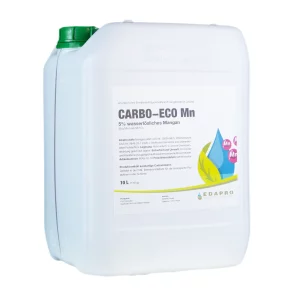
MnManganese foliar fertiliser Carbo-Eco Mn10 litres · carboxylated · sh6110291.35incl. VAT
What manganese does in the plant
The three jobs that decide something in the field.
Water splitting
In photosystem II sits a cluster of four manganese atoms. It splits water and delivers the electrons for the whole of photosynthesis.
Defence
Manganese is needed for lignin and phenol formation. Well supplied crop stands have firmer cell walls, for instance against eyespot in cereals.
Enzyme protection
The manganese superoxide dismutase catches free radicals. That matters under heat and drought stress.
How manganese gets into the plant
From the soil to where it is needed.
The plant takes manganese up only as Mn²⁺, and that is even more sensitive than with iron. When a soil turns more reductive, manganese comes before iron — as it dries out it is the first to be lost again. Bacteria oxidise Mn²⁺ to manganese dioxide as soon as air gets into the pores. On top of that, manganese reaches the root almost only through mass flow. That is why manganese tips faster than iron in dry conditions.
How it reaches the root
Share of the three transport routes in uptake.
Four fifths through diffusion. That short distance needs soil moisture, which is why manganese tips first in dry conditions.
Reference values from the literature, maize as the model crop. The shares shift with soil, crop and moisture; the ranking stays.
What helps manganese uptake and what holds it back
When you correct something, the ratio almost always matters more than the single value.
Helps
Holds back
What you see in the leaf sap analysis
Four findings and what they mean.
What you see in the soil analysis
Which values actually tell you something here.
Whether manganese is really the bottleneck shows in the leaf sap analysis. Together with the soil analysis you see reserve and uptake side by side — and save yourself the application that brings nothing.
Zinc
Zinc steers the growth hormone auxin and with it the extension. Without it shoots stay short and leaves small — and that only becomes visible once the yield is already lost.
Matching fertiliser
All prices incl. VAT, ex works Ruswil.
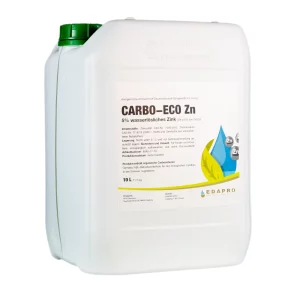
ZnZinc foliar fertiliser Carbo-Eco Zn10 litres · carboxylated · sh61103101.60incl. VAT
What zinc does in the plant
The three jobs that decide something in the field.
Auxin formation
Zinc is needed to form tryptophan, the precursor of auxin. Without zinc extension stops, the internodes stay short.
Enzymes
More than three hundred enzymes need zinc, among them carbonic anhydrase for the use of CO₂.
Protein build-up
Without zinc protein synthesis stalls, and free amino acids accumulate in the tissue.
How zinc gets into the plant
From the soil to where it is needed.
Zinc moves little in the soil and is fixed at a high pH. The most common trigger for zinc deficiency is however not a zinc problem but a phosphorus surplus: plenty of phosphate binds zinc and depresses uptake. On farms with decades of P fertilising that is the rule, not the exception.
How it reaches the root
Share of the three transport routes in uptake.
Zinc spreads fairly evenly across all three routes. No route carries it alone, which is why zinc reacts to structure, moisture and rooting at the same time.
Reference values from the literature, maize as the model crop. The shares shift with soil, crop and moisture; the ranking stays.
What helps zinc uptake and what holds it back
When you correct something, the ratio almost always matters more than the single value.
Helps
Holds back
What you see in the leaf sap analysis
Four findings and what they mean.
What you see in the soil analysis
Which values actually tell you something here.
What compost tea contributes for zinc
Zinc clings in the soil to clay, humus and phosphate. It is released by the same organic acids that also free phosphate — and by siderophores, which bind zinc alongside iron.
Who does the work in the compost tea
If you top zinc up through the leaf, you fix the finding. If you build the soil life up, you work on the cause. In practice you mostly need both, in that order.
Whether zinc is really the bottleneck shows in the leaf sap analysis. Together with the soil analysis you see reserve and uptake side by side — and save yourself the application that brings nothing.
Copper
Copper firms up the straw and secures fertilisation. The requirement is tiny, but so is the range between deficiency and damage — copper is the element where a measurement is worth more than a rule of thumb.
Matching fertiliser
All prices incl. VAT, ex works Ruswil.
What copper does in the plant
The three jobs that decide something in the field.
Lignin formation
Polyphenol oxidase needs copper. Without it the straw stays soft, and lodged cereals are the result.
Fertilisation
Copper deficiency disturbs pollen formation. In cereals you see that as white ear and empty spikelets.
Photosynthesis
Plastocyanin carries electrons between the two photosystems and holds one copper atom.
How copper gets into the plant
From the soil to where it is needed.
Copper clings tightly to organic matter. That is why deficiency occurs on humus-rich and on peat soils, even though the total content there can be high. At the same time copper accumulates on land with long-term copper use in crop protection, where it burdens the soil life. Both directions occur — so measure first.
How it reaches the root
Share of the three transport routes in uptake.
Seven parts in ten through direct root interception. Copper does not come to the root, the root has to go to it.
Reference values from the literature, maize as the model crop. The shares shift with soil, crop and moisture; the ranking stays.
What helps copper uptake and what holds it back
When you correct something, the ratio almost always matters more than the single value.
Helps
Holds back
What you see in the leaf sap analysis
Four findings and what they mean.
What you see in the soil analysis
Which values actually tell you something here.
Whether copper is really the bottleneck shows in the leaf sap analysis. Together with the soil analysis you see reserve and uptake side by side — and save yourself the application that brings nothing.
Boron
Boron decides flowering, fertilisation and whether calcium arrives in the cell wall. It is not mobile, so the plant needs it continuously — a one-off reserve is of no use to it.
Matching fertiliser
All prices incl. VAT, ex works Ruswil.
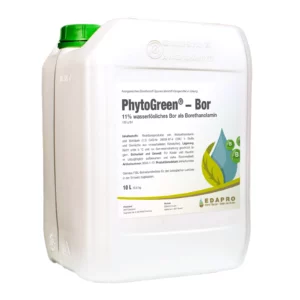
BBoron foliar fertiliser PhytoGreen-Bor10 litres · 150 g boron per litre · sh6110758.50incl. VAT
What boron does in the plant
The three jobs that decide something in the field.
Cell wall
Boron cross-links the pectins together with calcium. Without boron the cell wall stays unstable, even when there is enough calcium.
Fertilisation
Pollen tube growth needs boron. If it is missing at flowering, the fruit sets poorly — well documented in oilseed rape and pome fruit.
Sugar transport
Boron forms complexes with sugars and helps to move them through the membrane.
How boron gets into the plant
From the soil to where it is needed.
Boron comes passively with the water stream — the plant can barely steer the uptake. In dry conditions the stream stands still and boron deficiency occurs, even though the soil is well supplied. On light soils boron leaches easily the other way. The range between requirement and damage is the narrowest of all nutrients with boron, so never fertilise by feel.
How it reaches the root
Share of the three transport routes in uptake.
Boron runs passively with the water. In dry conditions the supply breaks down, even though the soil is well supplied.
Reference values from the literature, maize as the model crop. The shares shift with soil, crop and moisture; the ranking stays.
What helps boron uptake and what holds it back
When you correct something, the ratio almost always matters more than the single value.
Helps
Holds back
What you see in the leaf sap analysis
Four findings and what they mean.
What you see in the soil analysis
Which values actually tell you something here.
Whether boron is really the bottleneck shows in the leaf sap analysis. Together with the soil analysis you see reserve and uptake side by side — and save yourself the application that brings nothing.
Molybdenum
The plant needs molybdenum in the tiniest amounts, and without it the whole nitrogen conversion stops. When nitrate in the leaf sap is high and the protein is still missing, look here first.
Matching fertiliser
All prices incl. VAT, ex works Ruswil.
What molybdenum does in the plant
The three jobs that decide something in the field.
Nitrate reductase
The enzyme that converts nitrate to nitrite carries molybdenum at its centre. Without molybdenum the nitrate that has been taken up stands unused in the plant.
Nitrogen fixation
The nitrogenase of the rhizobia is a molybdenum enzyme. Legumes therefore have the highest requirement.
Sulphur conversion
Sulphite oxidase needs molybdenum as well. Nitrogen and sulphur metabolism are connected here.
How molybdenum gets into the plant
From the soil to where it is needed.
Molybdenum is the only trace element whose availability rises as the pH goes up. On acid soils it is missing, and liming often fixes the deficiency on its own. At a few grams per hectare the requirement is so small that a foliar application almost always covers it. Conversely a surplus is an issue in forage production, because it disturbs the copper supply of the animals.
How it reaches the root
Share of the three transport routes in uptake.
Molybdate runs with the water stream. Uptake is rarely the problem, the pH is.
Reference values from the literature, maize as the model crop. The shares shift with soil, crop and moisture; the ranking stays.
What helps molybdenum uptake and what holds it back
When you correct something, the ratio almost always matters more than the single value.
Helps
Holds back
What you see in the leaf sap analysis
Four findings and what they mean.
What you see in the soil analysis
Which values actually tell you something here.
Whether molybdenum is really the bottleneck shows in the leaf sap analysis. Together with the soil analysis you see reserve and uptake side by side — and save yourself the application that brings nothing.
Silicon
Silicon is deposited in the cell wall and makes it mechanically harder — against mildew, sucking insects and lodging. In several trials with leaf sap analyses we have confirmed that compost tea supports silicon uptake.
Matching fertiliser
All prices incl. VAT, ex works Ruswil.
SiSilicon foliar fertiliser PhytoGreen Bio-Silizium10 litres · sh61118coming soon
What silicon does in the plant
The three jobs that decide something in the field.
Mechanical barrier
Silicon is deposited as opal under the leaf epidermis. Fungal hyphae and sucking mouthparts get through less easily — that is a physical effect, not a biochemical one.
Standing power
Deposited silicon stiffens the straw. In cereals and in rice the link with lodging has long been described.
Stress tolerance
Silicon softens the effect of heavy metals and salt, because it binds them in the root and slows the transport into the leaf.
How silicon gets into the plant
From the soil to where it is needed.
Silicon is abundant in the soil, but mostly as quartz and therefore insoluble. Available to the plant is only the dissolved silicic acid, and that comes mainly from weathering and from plant residues. Silicon travels upwards only and is deposited where it lands. Newly formed tissue therefore needs a continuous resupply.
What helps silicon uptake and what holds it back
When you correct something, the ratio almost always matters more than the single value.
Helps
Holds back
What you see in the leaf sap analysis
Four findings and what they mean.
What you see in the soil analysis
Which values actually tell you something here.
What compost tea contributes for silicon
Silicon is present in the soil as quartz and silicate and is therefore practically insoluble. Available to the plant is monosilicic acid Si(OH)₄ alone. Bacteria break the O-Si-O bond open with organic acids and release exactly that form.
Who does the work in the compost tea
That fits our practice: in several trials with leaf sap analyses we have confirmed that compost tea supports silicon uptake. The mechanism here is the most likely explanation for it.
Whether silicon is really the bottleneck shows in the leaf sap analysis. Together with the soil analysis you see reserve and uptake side by side — and save yourself the application that brings nothing.
Sodium
Sodium is dispensable for most crops and a real advantage for a few. In sugar beet, fodder beet and chard it replaces part of the potassium — on all other land it is more of a structural issue.
Matching soil amendment
All prices incl. VAT, ex works Ruswil.
NaNatural rock salt25 kg bagged · soil amendment · sh5107035.95incl. VAT
What sodium does in the plant
The three jobs that decide something in the field.
Potassium substitute
In natrophilic species sodium takes over part of the osmotic work of potassium. That saves potassium for the places where it cannot be replaced.
Water balance
Sodium lowers the osmotic potential in the vacuole. The crop stand copes better with drought as a result.
Leaf area
In beet a sodium application leads to larger leaves and a longer assimilation period.
How sodium gets into the plant
From the soil to where it is needed.
Sodium and potassium share transport routes and exchange sites. In natrophilic crops that is an advantage: sodium takes over jobs that potassium would otherwise be needed for. In all others it displaces calcium and magnesium on the exchanger without doing their work. It then worsens the crumb stability, and the soil caps.
What helps sodium uptake and what holds it back
When you correct something, the ratio almost always matters more than the single value.
Helps
Holds back
What you see in the leaf sap analysis
Four findings and what they mean.
What you see in the soil analysis
Which values actually tell you something here.
Whether sodium is really the bottleneck shows in the leaf sap analysis. Together with the soil analysis you see reserve and uptake side by side — and save yourself the application that brings nothing.
Selenium
The plant does not need selenium, the animal does. Swiss soils are low in selenium, and correspondingly little ends up in the forage — a foliar application is the most direct way to change that.
Matching fertiliser
All prices incl. VAT, ex works Ruswil.
SeCobalt-selenium-molybdenum fertiliser PhytoGreen CoSeMo10 litres · sh61119coming soon
What selenium does in the plant
The three jobs that decide something in the field.
Not essential for the plant
Selenium has no proven function in the higher plant. It takes it up because it chemically resembles sulphate.
Animal health
Selenium is part of the glutathione peroxidase in the animal. Deficiency shows as white muscle disease and poorer fertility.
Stress defence
At higher rates selenium improves the antioxidative capacity of the plant — the data on that are thin.
How selenium gets into the plant
From the soil to where it is needed.
Selenium uses the same transporter as sulphate, and that is exactly the catch: whoever fertilises strongly with sulphur depresses selenium uptake. Swiss soils are naturally low in selenium, because the parent rock contains little. Through the soil that can barely be corrected, through a foliar application it can — which is why in forage production the route goes through the leaf.
What helps selenium uptake and what holds it back
When you correct something, the ratio almost always matters more than the single value.
Helps
Holds back
What you see in the leaf sap analysis
Four findings and what they mean.
What you see in the soil analysis
Which values actually tell you something here.
Whether selenium is really the bottleneck shows in the leaf sap analysis. Together with the soil analysis you see reserve and uptake side by side — and save yourself the application that brings nothing.
Cobalt
The plant needs cobalt only indirectly — the rhizobia need it all the more. Without cobalt no nitrogen fixation, and in the feed the ruminant lacks it for forming vitamin B12.
Matching fertiliser
All prices incl. VAT, ex works Ruswil.
CoCobalt-selenium-molybdenum fertiliser PhytoGreen CoSeMo10 litres · sh61119coming soon
What cobalt does in the plant
The three jobs that decide something in the field.
Nitrogen fixation
Rhizobia need cobalt for the cobalamin, without which they fix no nitrogen from the air. In legumes cobalt therefore works indirectly through the symbiosis.
Vitamin B12
In the rumen micro-organisms form vitamin B12 from cobalt. If cobalt is missing in the feed, the animal lacks the vitamin.
No requirement without symbiosis
For plants without rhizobia cobalt is dispensable. The benefit lies with the legumes and with the animal.
How cobalt gets into the plant
From the soil to where it is needed.
In the soil cobalt clings to manganese oxides and is fixed at a high pH. On calcareous and on strongly leached soils it runs short. For the plant itself that barely matters — it is decisive for the rhizobia of the legumes and for the ruminants that form vitamin B12 from it.
What helps cobalt uptake and what holds it back
When you correct something, the ratio almost always matters more than the single value.
Helps
Holds back
What you see in the leaf sap analysis
Four findings and what they mean.
What you see in the soil analysis
Which values actually tell you something here.
Whether cobalt is really the bottleneck shows in the leaf sap analysis. Together with the soil analysis you see reserve and uptake side by side — and save yourself the application that brings nothing.
Foliar fertilisers for plant supply
Chelated foliar fertilisers for direct nutrient supply to all crops.
Can be combined with compost tea or other fertilisers.
Mode of action and benefits of foliar fertilisers
Our chelated foliar fertilisers are specifically developed for application on the leaves and contain nutrients in a highly bioavailable form. The chelation process improves nutrient uptake and utilisation, leading to a faster and more efficient nutrient supply to every leaf.
Foliar application can quickly counteract acute nutrient deficiencies and improve plant health.
The application of our foliar fertilisers can be combined with other foliar fertilisers and compost tea.
Liquid Foliar Fertiliser

Organic Liquid Calcium 10 liters
Liquid calcium fertilizer, 8.0% CaO (water-soluble calcium oxide) for rapid uptake via the leaf. To improve assimilation performance, for higher yields: 4–8 l/ha or
2% w/v (2 l/100 l water) for foliar sprays.
The application of Bio NPK 2-1-10 can be combined with other foliar fertilizers and compost tea. (except sulfur and magnesium sulfate)
Listed as an input by the Research Institute of Organic Agriculture (FiBL).

PhytoGreen® – Organic NPK 2-1-10
Organic NPK fertilizer, liquid, with a high potassium content from purely plant-based raw materials. Through fermentation and enzymatic hydrolysis, a high-quality, potassium-focused complete fertilizer is created, which also provides water-soluble trace elements. Suitable for the fruiting phase of the crop.
The application of Organic NPK 2-1-10 can be combined with other foliar fertilizers and compost tea.
Listed as an operating material by the Research Institute of Organic Agriculture (FiBL).
Content: 10 liters
On request: 200 liters, 1000 liters

Iron Foliar Fertilizer Carbo-Eco-Fe 10 Liters
Iron fertilizer solution (from FeSO4) with 5% water-soluble iron (Fe). Corrects and prevents iron deficiency in all crops. Rapid absorption and processing within the plant. Corrects and prevents iron deficiency in all crops.
Listed as an input with the Research Institute of Organic Agriculture (FiBL).
Content: 10 liters
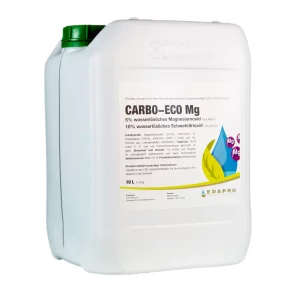
Magnesium leaf fertiliser Carbo-Eco-Mg 10 litres
Magnesium fertiliser solution with 5% water-soluble magnesium oxide (MgO) and 10% water-soluble sulphuric anhydride (SO3). Corrects and prevents magnesium deficiency in all crops. Direct absorption and processing in the plant.
Registered as a farm input with the Research Institute of Organic Agriculture (FiBL) (expected to be listed from September 2023).
Contents: 10 litres




PhytoGreen® – Organic NPK 7-3-2
Organic NPK fertilizer, liquid, with organically bound nitrogen from purely plant-based raw materials. Fermentation creates a high-quality fertilizer with water-soluble nutrients. Phosphorus is also present in a water-soluble form that is directly
available to plants.
Application of Organic NPK 7-3-2 can be combined with other foliar fertilizers and compost tea.
Listed as an input by the Research Institute of Organic Agriculture (FiBL).
Contents: 10 L
On request: 200 L, 1,000 L

The chelation
A chelate is a chemical compound in which a metal ion is bound to a larger organic molecule, the chelating agent. This bond forms a complex that is both stable and soluble. The chelating agent usually forms multiple bonds with the metal ion, creating a ring-like structure. This unique structure of the chelate increases the stability and bioavailability of the metal ion and prevents it from precipitating or becoming inaccessible to plants or organisms.

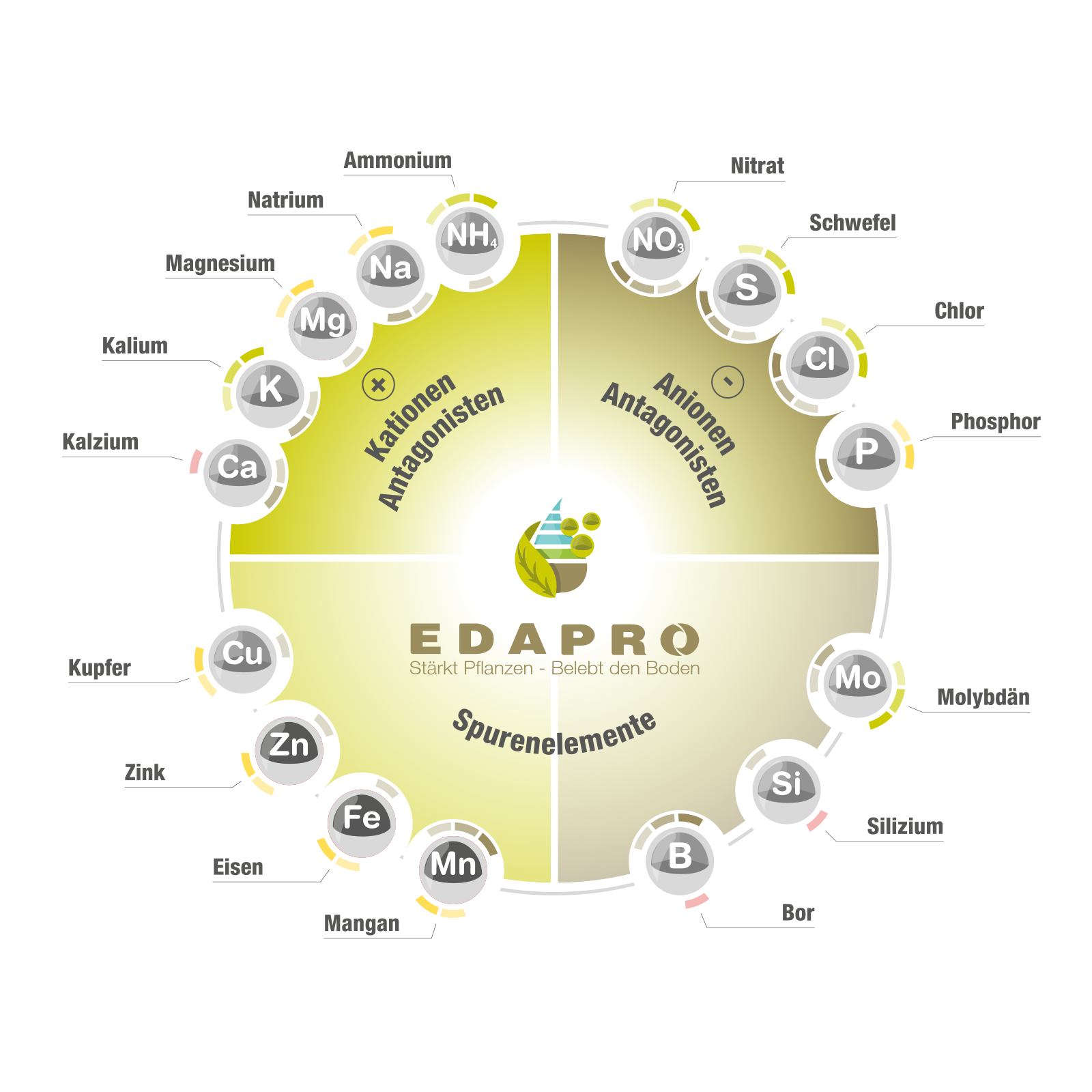
Nutrient Interactions – Interrelationships in the Plant
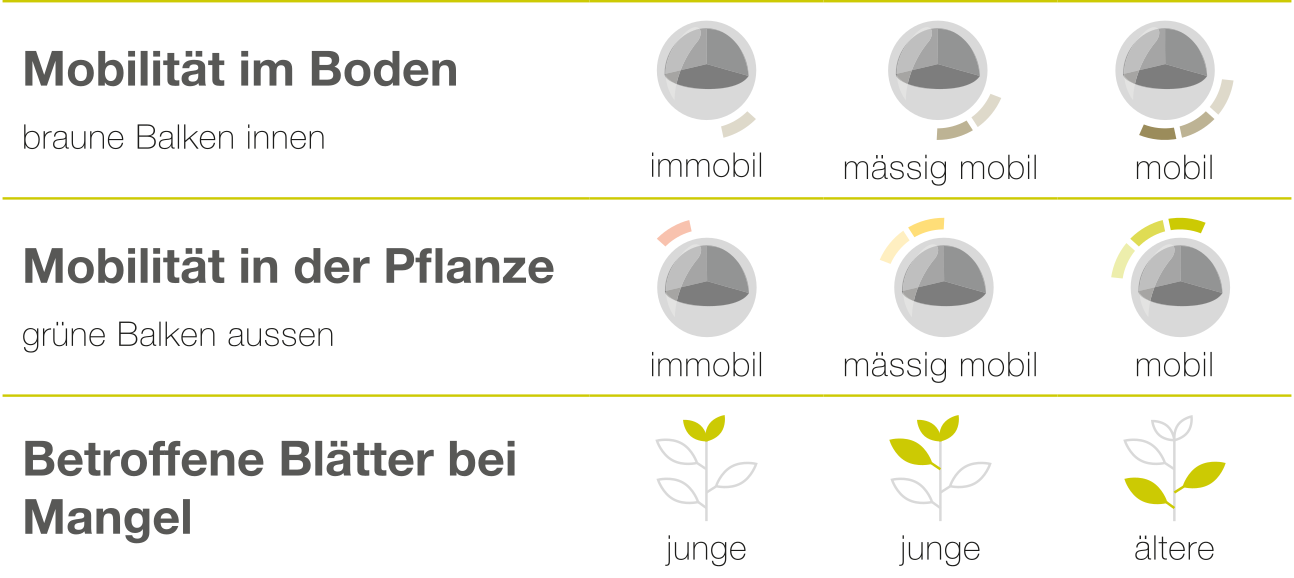
Nutrient interactions in the plant and in the soil play an important role in plant nutrition. Nutrients can either have a promoting effect on each other (synergism), or mutually inhibit each other's effect (antagonism).
Identifying nutrient deficiencies on time
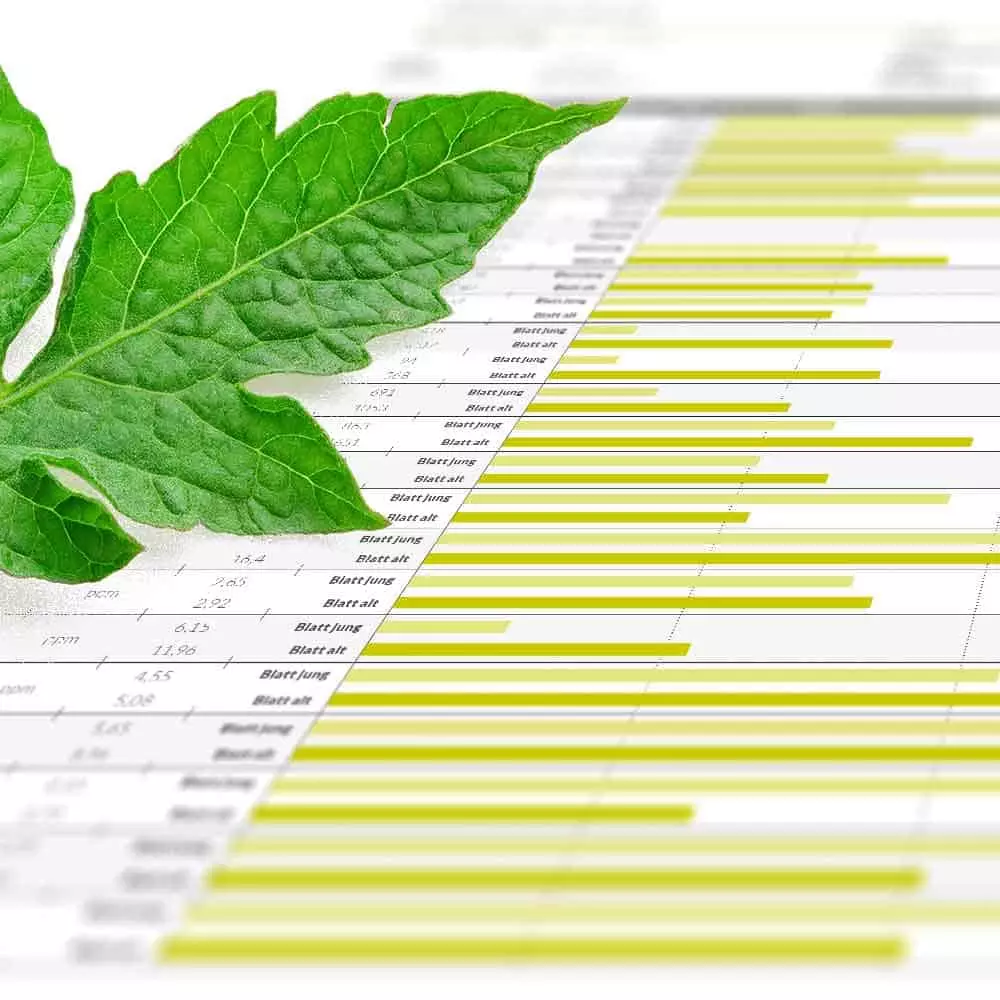
Plant sap analysis shows the current nutrient supply in the plant. It reveals nutrient surpluses and deficiencies before symptoms can be observed.

Leaf Sap Analysis Kit
Select the number of analyses for this year and the desired number of shipments. The option "without pre-paid shipping documents" is for customers sending their samples from an EU country to the laboratory in the Netherlands.
The pre-paid shipping documents can be dropped off at post offices and will reach the laboratory in the Netherlands in 1–2 days.
As an example; 8 analyses and 2 shipping dates:
You take 4 samples and send them together. Four weeks later — after implementing the recommended measures — you take another 4 samples and send them as a second shipment. This allows for targeted monitoring of the measures' success.
Valid for the current calendar year
Plant nutrition – the driver of soil regeneration
Why plant nutrition is the key to regenerative agriculture
No-till, soil cover, cover crops, biodiversity, and continuous living roots – the principles of regenerative agriculture are well known. What is often overlooked: without targeted plant nutrition, soil regeneration falls far short of its potential. This is because how much carbon a plant sequesters, how strongly it releases root exudates, and how well it resists pests depends directly on whether its nutrient supply is correct.
Photosynthesis: More than just sunlight and water
Photosynthesis is the central process through which plants sequester CO₂ from the atmosphere and convert it into sugar. What many do not know: photosynthesis requires not only water, CO₂, and sunlight, but also a balanced supply of minerals. Magnesium forms the central atom of chlorophyll, manganese activates water oxidation, iron transports electrons in the light reaction, and phosphorus provides the energy for carbon fixation. If even one of these nutrients is missing, photosynthesis runs at a throttled pace – often far below the plant’s actual potential.

What plant sap analyses show
At EDAPRO, we rely on plant sap analyses to measure the nutritional status of the plant directly – not via the soil, but in the plant itself. Plant sap analysis measures the nutrients actually available to the plant in the cell sap: macro-elements such as potassium, calcium, and magnesium as well as trace elements such as iron, manganese, zinc, copper, boron, molybdenum, and silicon.
Our extensive experience with thousands of plant sap analyses shows: nutrient imbalances are widespread – even on well-managed farms. Common findings include manganese and iron deficiencies, magnesium levels that are too low, deficits in boron, zinc, copper, and silicon, as well as a disrupted ratio of potassium to calcium. As a result, many plants operate their photosynthesis significantly below their potential.
Targeted foliar fertilisation as a quick correction
Based on the plant sap analysis, we recommend targeted foliar fertilisation with individual nutrients – exactly where the analysis shows a deficiency. Foliar fertilisers work quickly: the nutrients are absorbed directly through the leaf and are available to the plant within a few hours. In this way, photosynthetic performance can be measurably increased within days.
Typical foliar fertiliser recommendations include iron and manganese to increase photosynthesis, magnesium for chlorophyll formation, boron for sugar transport into the root system, as well as zinc and copper for hormone production and disease resistance. The dosage is calculated individually for each crop – based on the values measured in the plant sap analysis.
Compost tea and compost extract – activating soil life
Foliar fertilisation and soil biology go hand in hand. Compost tea and compost extract deliver living microorganisms directly into the soil and onto the leaf surface: bacteria, fungal hyphae, protozoa, and other soil organisms that mobilise nutrients and suppress pathogens.
Compost tea is actively aerated for 24–48 hours and multiplies the microorganisms from high-quality compost. Compost extract is a cold-extracted infusion that is faster to produce and is particularly suitable for foliar application. Both processes complement foliar fertilisation ideally: while the foliar fertiliser corrects the nutrient supply immediately, the compost tea builds up active soil life in the long term, which takes over nutrient mobilisation from soil reserves – especially for phosphorus and silicon.
More photosynthesis = more carbon in the soil
The connection is direct: a plant that is optimally supplied with nutrients performs more photosynthesis, forms more sugar, and releases a larger portion of it into the soil as root exudates. These sugars feed the soil microbiology – bacteria, mycorrhizal fungi, and protozoa – which in return mobilise nutrients for the plant. At the same time, the sugars glue soil particles into stable aggregates, thus building up the crumb structure and humus.
Contrary to the common assumption that growing crops inevitably lowers the carbon content of the soil, our experience shows: with targeted management of plant nutrition via plant sap analyses and foliar fertilisation, humus content can be built up even under crops – while simultaneously achieving higher yields and a lower need for pesticides.
Less plant protection through better nutrition
An optimally nourished plant produces more secondary plant metabolites and builds stronger cell walls. This increases natural resistance to fungal diseases and pests. Plant sap analysis also shows the way here: a high sugar content in the plant sap – measurable as a Brix value – correlates directly with the plant’s resilience. This is because sucking insects and fungi prefer plants with low sugar and high free nitrogen in the leaf.
Our approach at EDAPRO
We combine plant sap analyses, targeted foliar fertilisation, and biological soil revitalization with compost tea and compost extract into a holistic system. Every recommendation is based on measured values – not on blanket formulas. In this way, every franc spent on fertiliser is used where it achieves the greatest impact.
For farmers, winegrowers, fruit growers, and vegetable producers, this means: better yields, healthier plants, less pesticide use, and a soil that regenerates year after year.


