


Kristallkalk sun protection – 25 kg
CHF 64.65 incl. VAT
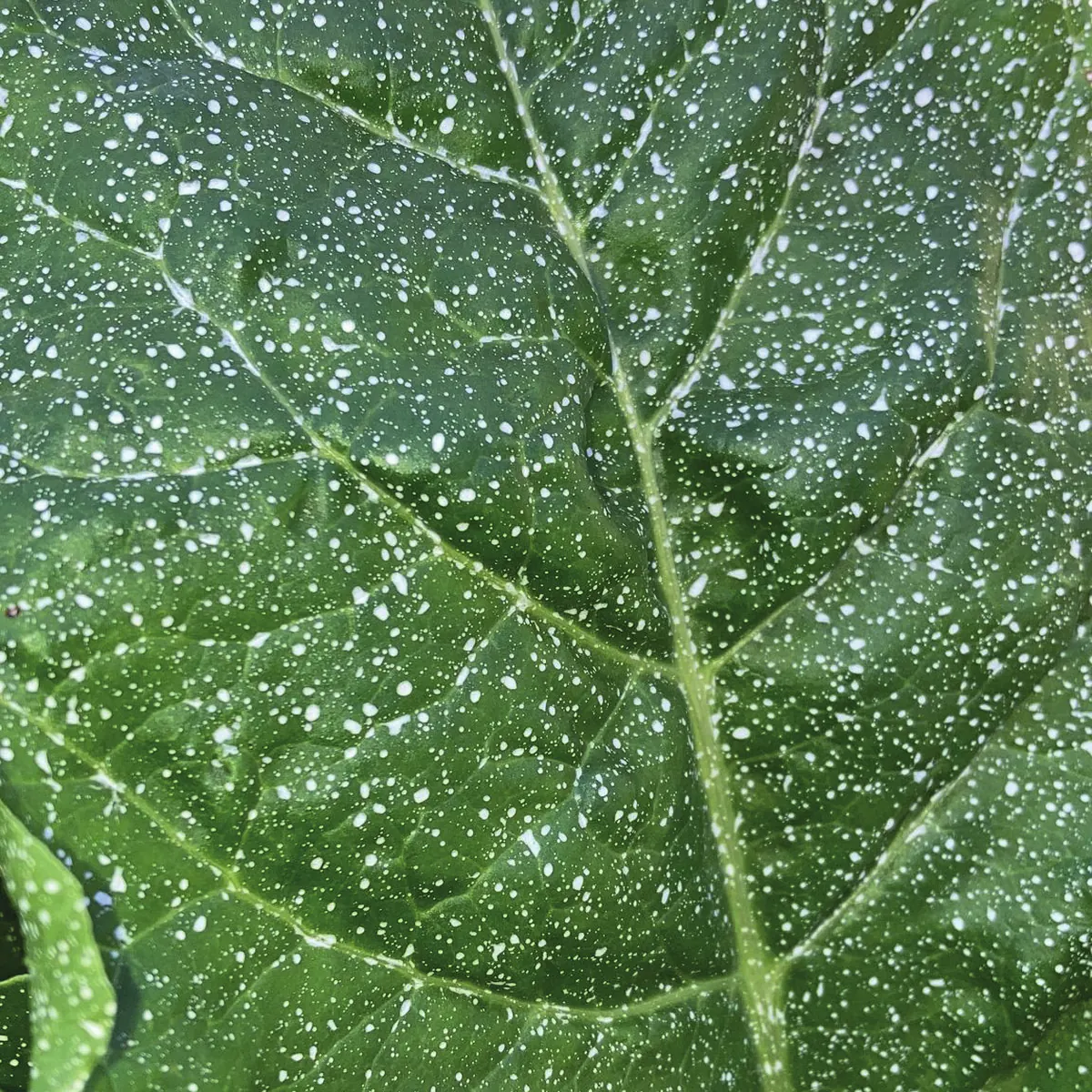
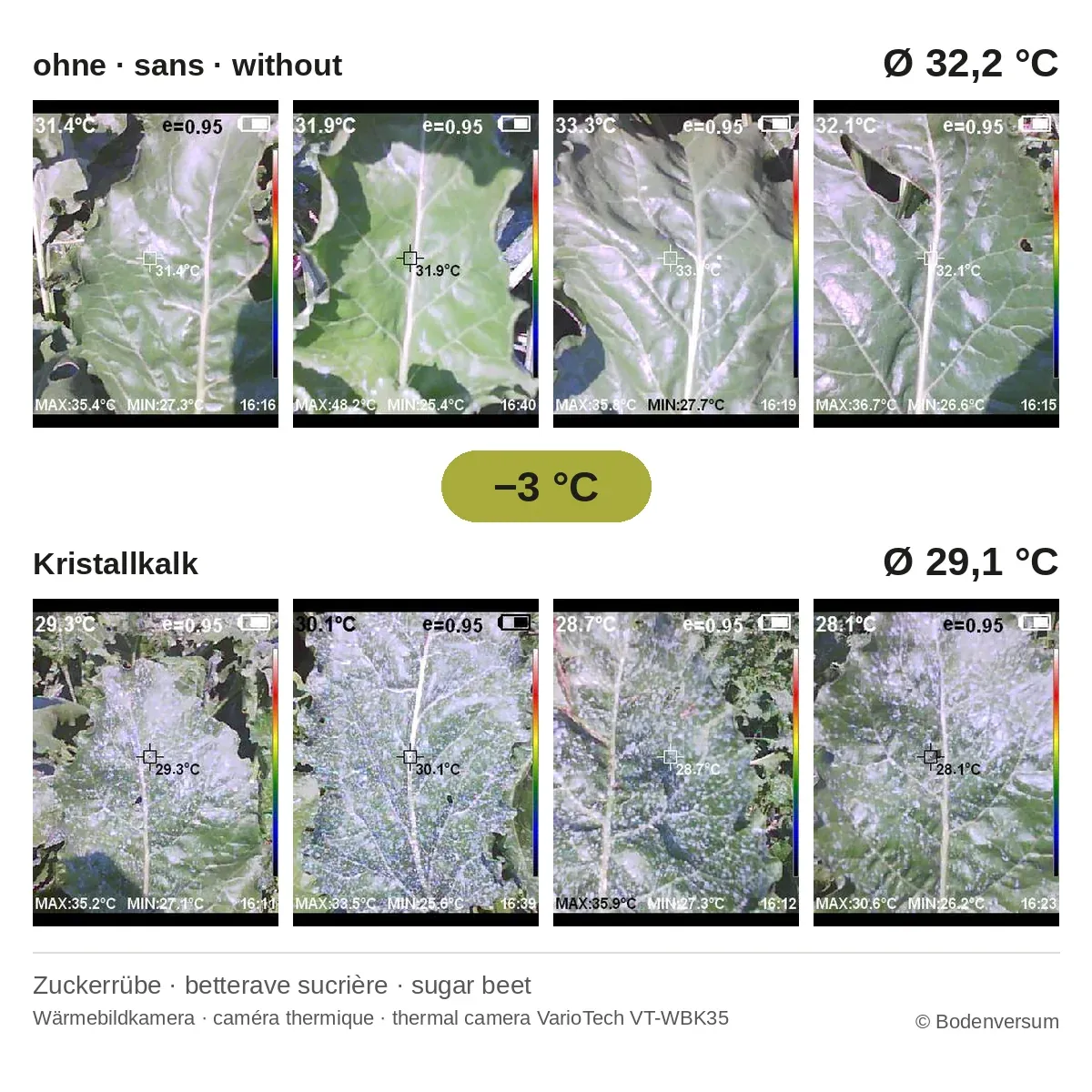
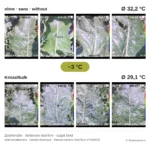
Kristallkalk keeps leaves cooler on hot days. The white film of fine lime crystals reflects part of the sunlight: in sugar beet, Bodenversum measured an average leaf temperature of 29.1 instead of 32.2 °C.
This does not slow down photosynthesis. On a hot summer day the leaf has more light than it can use; what holds it back is the heat. In every trial Bodenversum has shown us, the yield with Kristallkalk was above the untreated control.
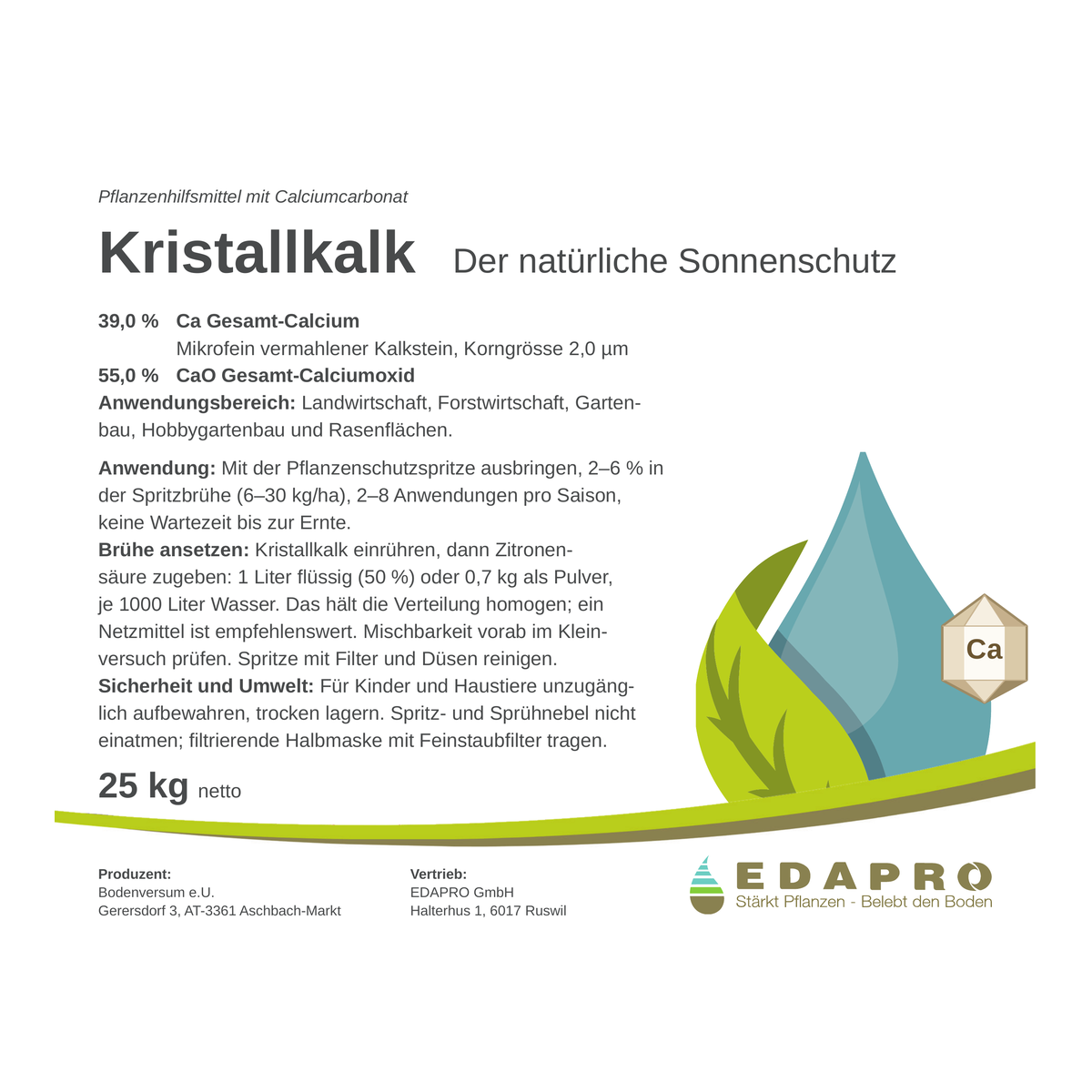
Suitable for sugar beet, potatoes, cereals, vegetables, vines and fruit, and as a trunk coating. The needle-shaped crystals stick to the leaf better than ground limestone. Every application also brings calcium onto the leaf: 39 % Ca as calcium carbonate.
Apply with a crop sprayer: 6–10 kg/ha depending on water volume, 2–8 applications per season, no waiting period before harvest.
Contents: 25 kg bag
On request: pallet of 42 bags, 1050 kg
What the film does
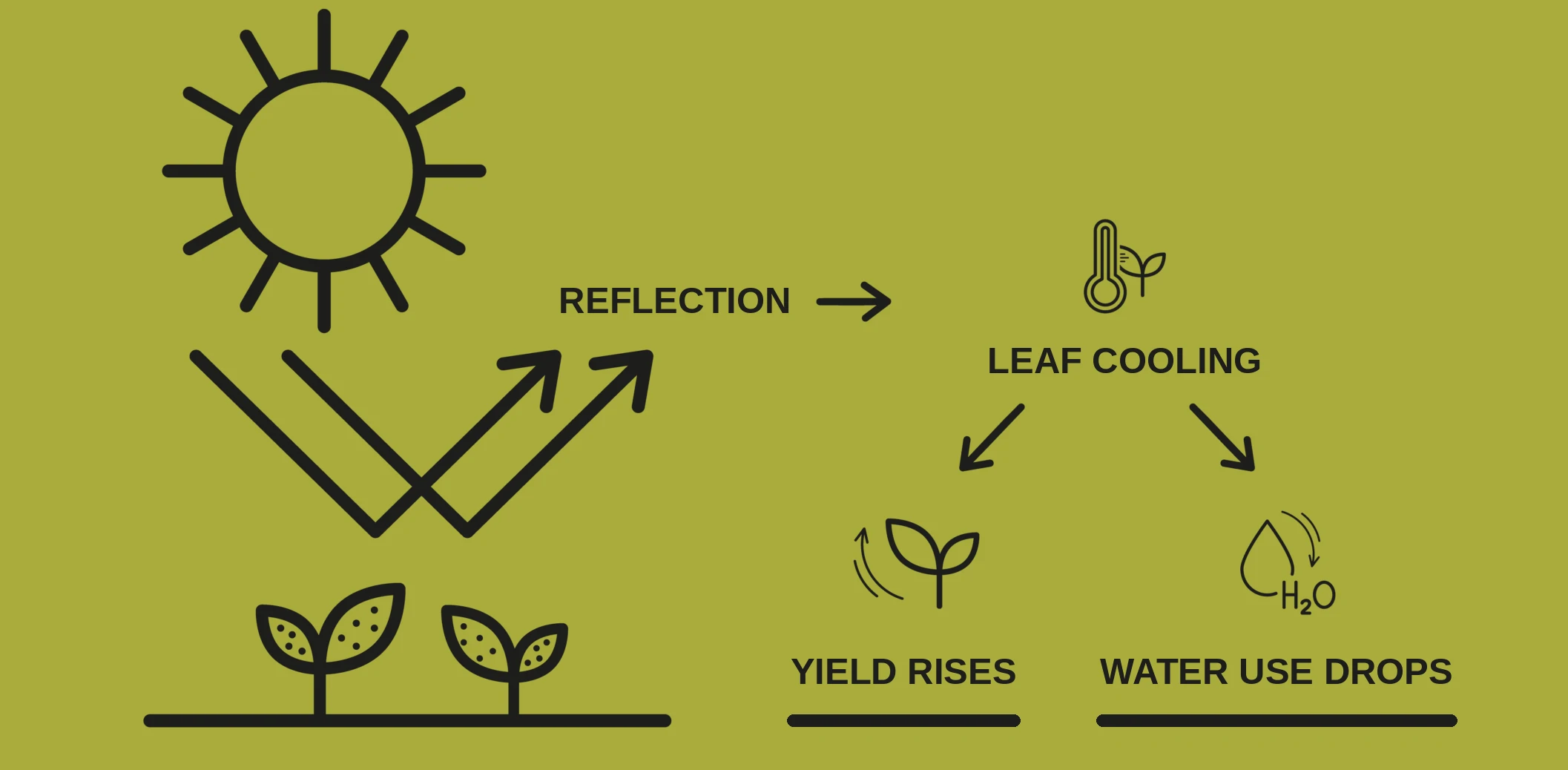
Kristallkalk leaves a white coating on the leaf that reflects part of the sunlight, including UV radiation. As a result, the leaf heats up less. Bodenversum states that leaf temperatures drop by 3 to 6 °C. In sugar beet, Bodenversum measured an average of 29.1 instead of 32.2 °C with a thermal camera.
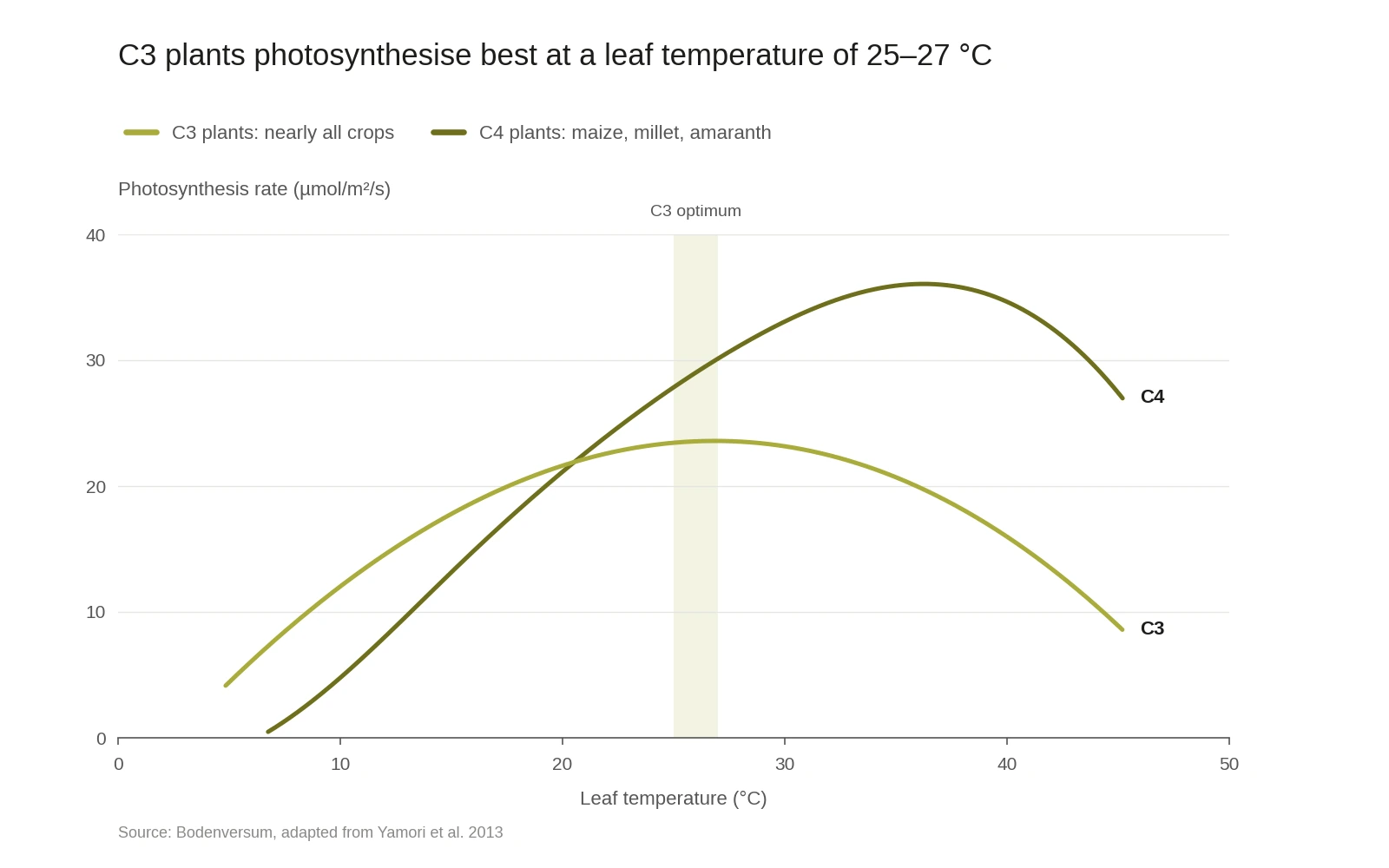
This matters because yield is often formed in the hottest weeks of the year. According to Bodenversum, C3 plants, which means all crops except maize, millet and amaranth, form the most yield at a leaf temperature of 25 to 27 °C. Above that, photosynthesis works less efficiently. A cooler leaf also needs to evaporate less water to cool itself.
Less light, but not less yield
The film reflects light, and photosynthesis still gets enough. According to Bodenversum, 20 to 30 % of sunlight is sufficient for it. On a hot summer day there is more light than the leaf can use. The bottleneck is temperature.
The trials show the same thing: in every trial Bodenversum has shown us, the yield with Kristallkalk was above the control, by between 3 and 18 %. Sugar and starch content in sugar beet and potatoes stayed at least the same.
Why crystals stick better than ground limestone
Kristallkalk is made in three steps: burning limestone, slaking it into milk of lime and feeding the CO2 released during burning back in. Very pure calcium carbonate then crystallises out as sharp needles with a mean size of 2 µm. Ground limestone, by contrast, consists of round to cube-shaped grains of very different sizes.
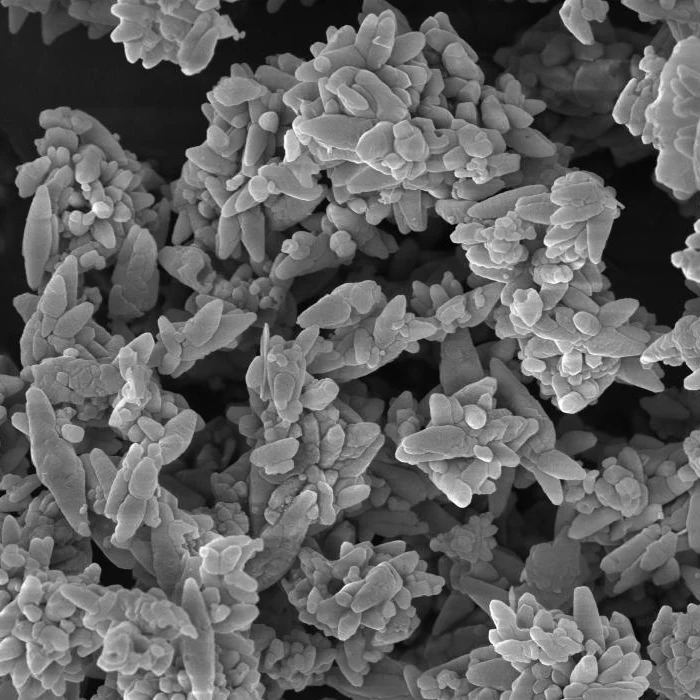
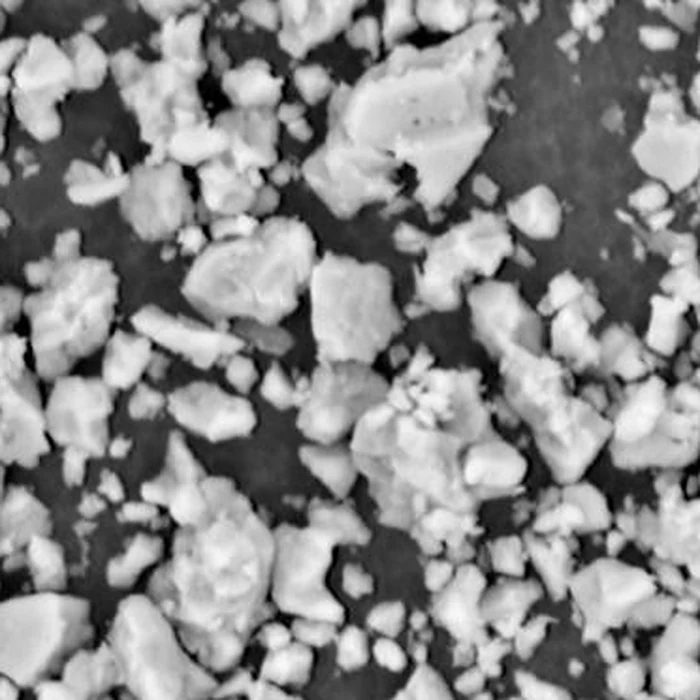
Scanning electron microscope images: Bodenversum
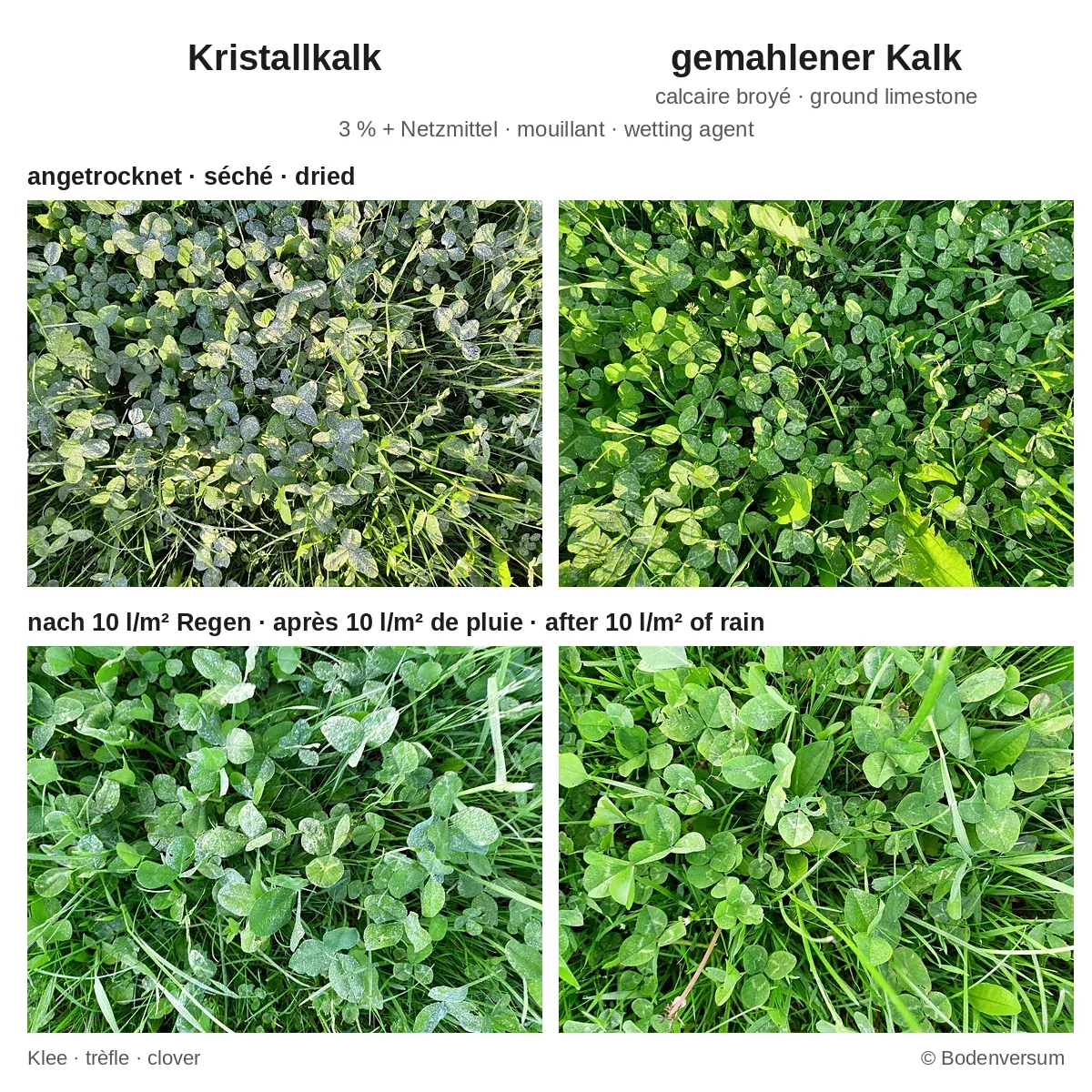
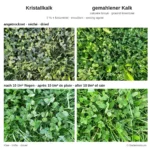
The needles hook into the leaf surface instead of rolling off. In Bodenversum’s comparison, each at 3 % with a wetting agent, Kristallkalk covered the leaf more densely once dry. After 10 l/m² of rain, visibly more Kristallkalk remained on the leaf. You can see the comparison in the image gallery.
Sugar beet and potatoes
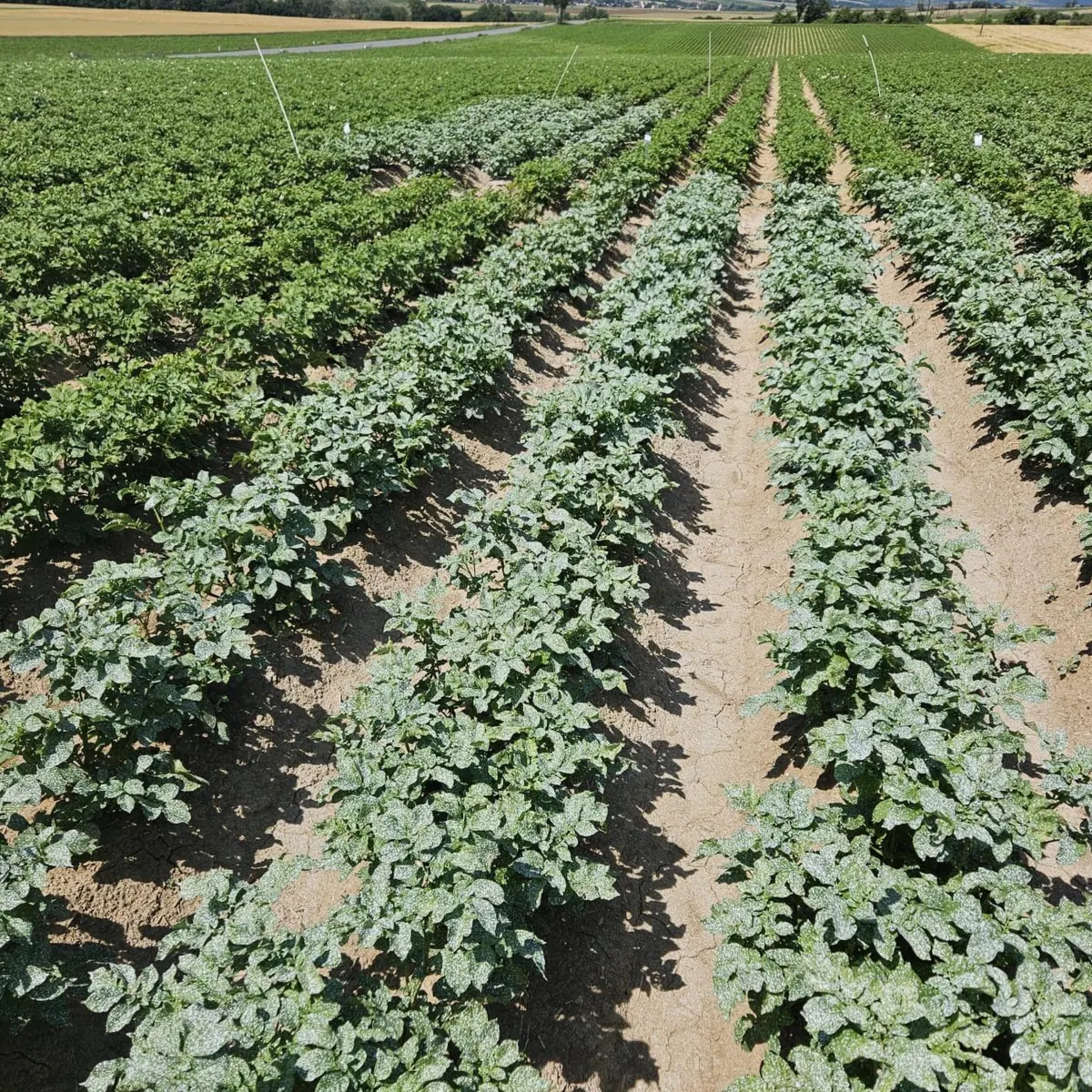
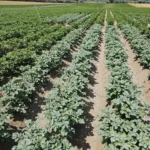
Bodenversum has measured these two crops the most. In sugar beet, sugar yield rose by 9.5 % in 2024 after four applications and by 20.6 % in 2025 after five. Sugar content was higher in both years. In potatoes, the extra yield across four varieties was between 5 and 14 %, and starch content stayed the same.
Start at canopy closure and repeat every 2–3 weeks. The film has to be on the leaf before the heat arrives.
Vines
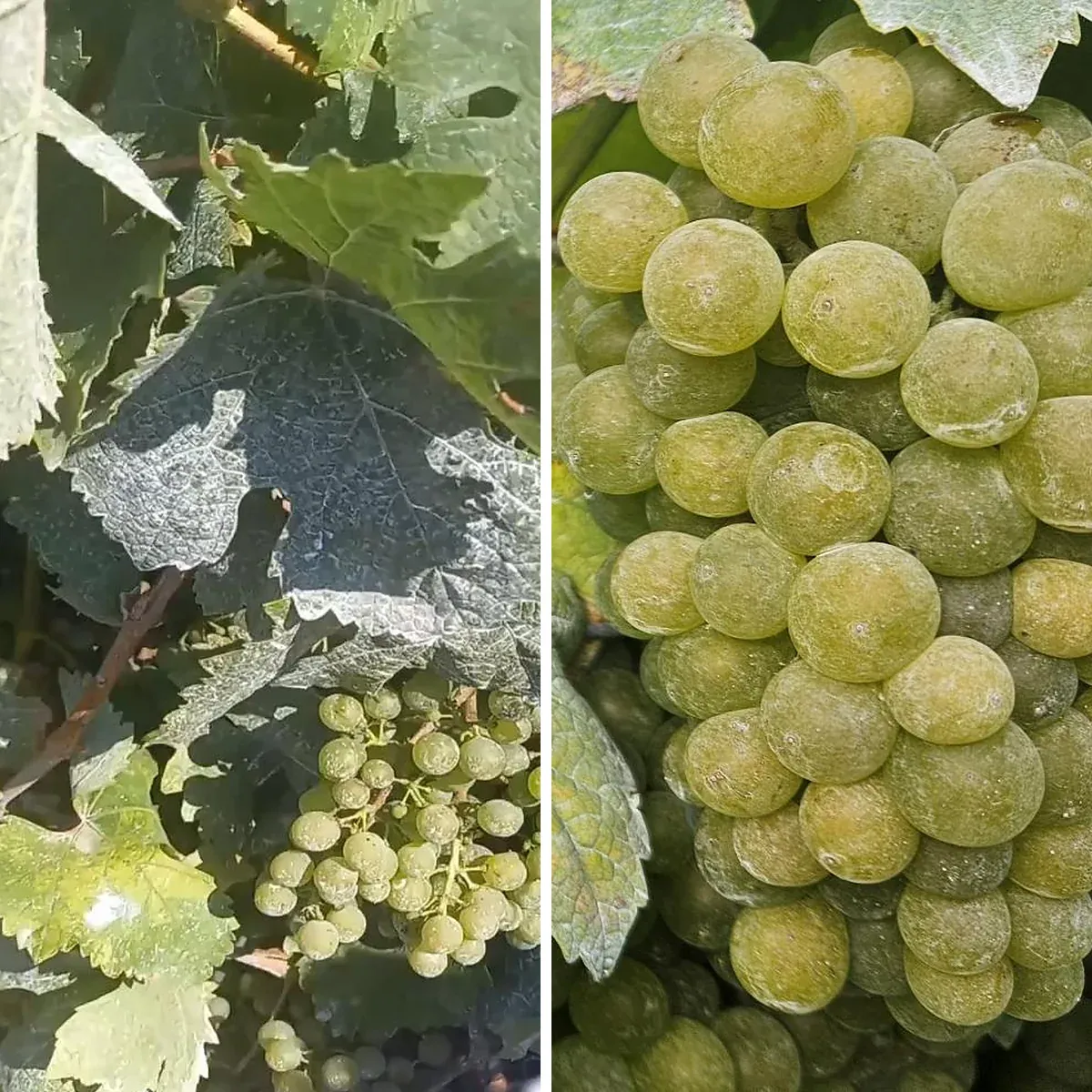
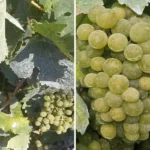
In vineyards, Kristallkalk goes on the canopy: after flowering, 2–4 applications at intervals of 2–3 weeks. For the bunch zone, Bodenversum recommends one application at the start of ripening.
Acidity and pH stayed the same in the replicated trial at LFS Hollabrunn (Grüner Veltliner, three replicates): 10.3 instead of 10.5 g/l acidity, pH 3.09 instead of 3.05. Yeast assimilable nitrogen was 29 % higher there. In two of Bodenversum’s field trials in the Weinviertel in 2025, acidity was 0.4 g/l higher in one and 0.5 g/l lower in the other.
In the four field trials in 2024 and 2025, sugar was the same or up to 0.9 °KMW higher (1 °KMW is roughly 5 °Oe). In Hollabrunn it was 1.3 °KMW lower, with 9 % more yield and no crop thinning. All trials measured the must; we have no wine analyses.
Fruit and trunk protection
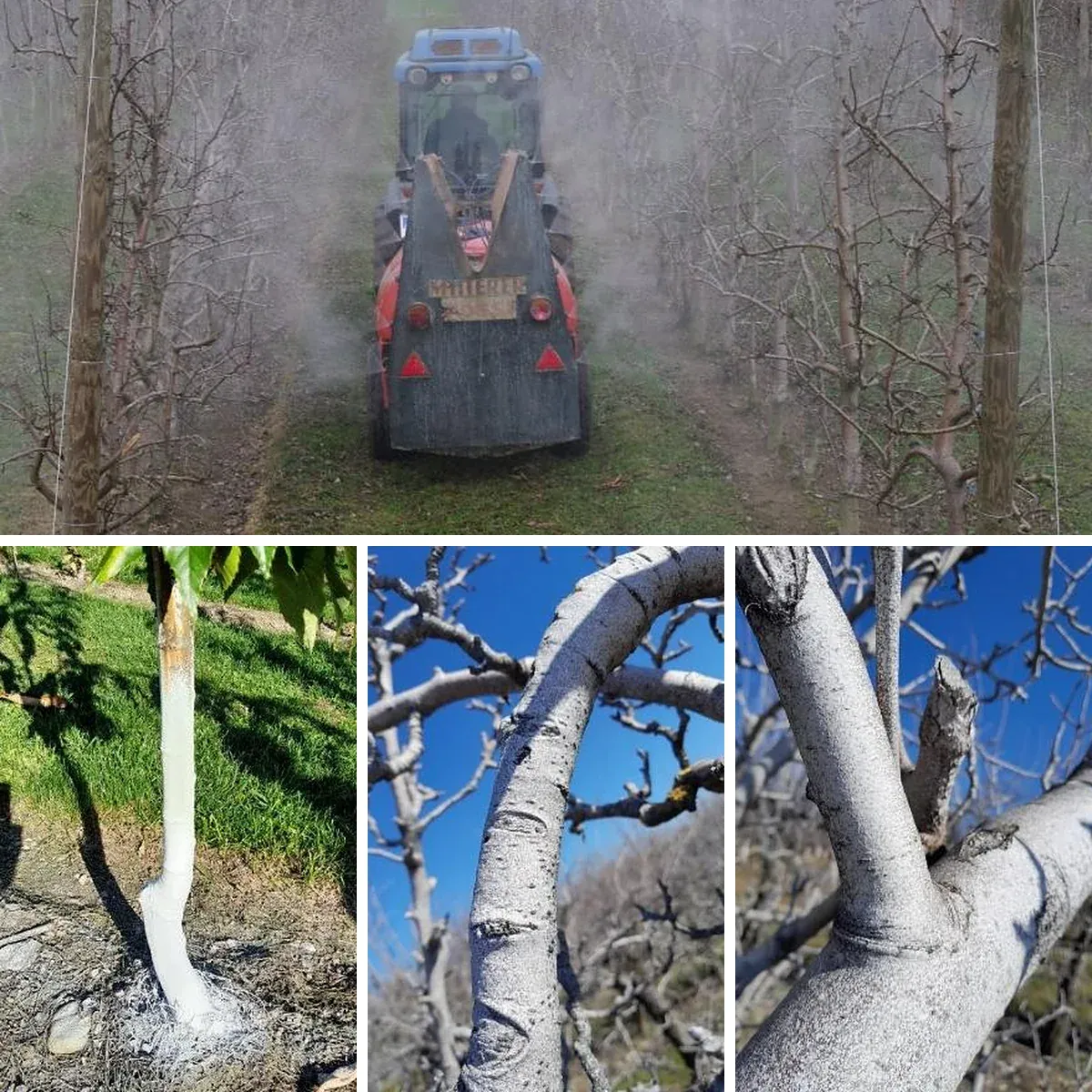
In orchards, the same applies to the foliage as in vines: 10 kg Kristallkalk in 300 l water per hectare, with a wetting agent. Bodenversum points out that the coating may still be visible on larger fruit at harvest.
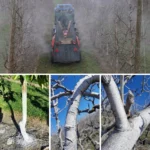
As a trunk coating, the white layer reflects the sun and keeps the bark cooler. Bodenversum recommends it against frost cracks. Spray 10–20 kg/ha in 300 l water with a wetting agent. With a hand sprayer you can apply a thicker coat, up to 1 part Kristallkalk to 3 parts water. Mix it in advance and keep stirring while spraying.
Application
| Crop | Rate | Timing |
|---|---|---|
| Cereals | 10 kg/ha, regardless of water volume | 1st at fully developed flag leaf, 2nd at flowering (ear treatment) |
| Potatoes, sugar beet | 6–10 kg/ha depending on water volume | from canopy closure, then every 2–3 weeks |
| Vegetables | 6–10 kg/ha depending on water volume | once all leaves have developed, then every 2–3 weeks |
| Hops | 6–10 kg/ha depending on water volume | towards the end of shoot elongation, then every 2–3 weeks |
| Vines, canopy | 10 kg/ha in 300 l water, with wetting agent | after flowering, 2–4 times at intervals of 2–3 weeks |
| Vines, bunch zone | 10 kg/ha in 400–500 l water | once at the start of ripening |
| Fruit, foliage | 10 kg/ha in 300 l water, with wetting agent | before the first hot spell, then every 2–3 weeks |
| Trunk coating | 10–20 kg/ha in 300 l water, with wetting agent; hand sprayer up to 1 part in 3 parts water | as needed |
The rate depends on the water volume: 200 l/ha → 6 kg/ha, 300–400 l/ha → 8 kg/ha, 500 l/ha → 10 kg/ha. That is 2–3 % in the spray liquid. 2–8 applications per season, no waiting period before harvest.
Preparing the spray liquid
Stir Kristallkalk into the water with the agitator running, then add citric acid: 1 litre as a 50 % solution or 0.7 kg as powder per 1000 litres of water. This keeps the distribution homogeneous. A wetting agent is recommended, because only the wetted leaf area is protected.
Keep agitating throughout. If the agitator was switched off during transport, stir up again before spraying. Use at least 4–5 bar; twin flat-fan nozzles work best. Spray onto a dry crop.
Kristallkalk can be mixed with many foliar fertilisers and crop protection products. Check compatibility beforehand in a small test. Add acid for lowering the pH only after the Kristallkalk. Clean the sprayer thoroughly after use, including filters and nozzles, and give it a full clean with citric acid at the end of the season.
What the film cannot do
- It does not replace water. If the soil is dry, a lower leaf temperature only helps to a limited extent.
- It only works where it lies. New growth is unprotected, and heavy rain wears the film away over time. That is why follow-up applications every 2–3 weeks are needed.
- It only works preventively. Once a crop is damaged, an application no longer helps.
- It stays visible. On larger fruit and on grapes the coating may still be visible at harvest. Plan for this with table fruit and table grapes.
What’s inside
| Total calcium | 39.0 % Ca |
| Total calcium oxide | 55.0 % CaO |
| Raw material | Limestone; calcium carbonate recrystallised, mean particle size 2.0 µm |
| Formulation | water-dispersible powder |
| Pack size | 25 kg net, pallet of 42 bags (1050 kg) |
| Producer | Bodenversum e.U., AT-3361 Aschbach-Markt |
Every application also brings calcium onto the leaf.
Safety and storage
Store in a dry place, out of reach of children and pets. Do not breathe spray mist. Wear a filtering half mask with a fine dust filter when mixing and applying.
Kristallkalk is not classified under GHS. We will send you the safety data sheet free of charge on request.
Need a full pallet (42 bags)? Write to us at info@edapro.ch.
Additional Information
| Weight | 25 kg |
|---|
Related products

Organic Liquid Calcium 10 liters
Liquid calcium fertilizer, 8.0% CaO (water-soluble calcium oxide) for rapid uptake via the leaf. To improve assimilation performance, for higher yields: 4–8 l/ha or
2% w/v (2 l/100 l water) for foliar sprays.
The application of Bio NPK 2-1-10 can be combined with other foliar fertilizers and compost tea. (except sulfur and magnesium sulfate)
Listed as an input by the Research Institute of Organic Agriculture (FiBL).
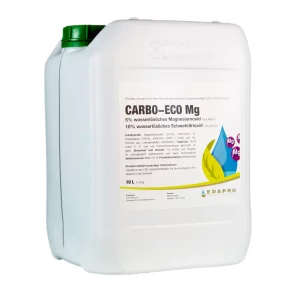
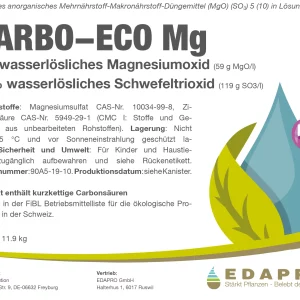
Magnesium leaf fertiliser Carbo-Eco-Mg 10 litres
Magnesium fertiliser solution with 5% water-soluble magnesium oxide (MgO) and 10% water-soluble sulphuric anhydride (SO3). Corrects and prevents magnesium deficiency in all crops. Direct absorption and processing in the plant.
Registered as a farm input with the Research Institute of Organic Agriculture (FiBL) (expected to be listed from September 2023).
Contents: 10 litres




PhytoGreen® – Organic NPK 7-3-2
Organic NPK fertilizer, liquid, with organically bound nitrogen from purely plant-based raw materials. Fermentation creates a high-quality fertilizer with water-soluble nutrients. Phosphorus is also present in a water-soluble form that is directly
available to plants.
Application of Organic NPK 7-3-2 can be combined with other foliar fertilizers and compost tea.
Listed as an input by the Research Institute of Organic Agriculture (FiBL).
Contents: 10 L
On request: 200 L, 1,000 L