


PhytoGreen® – Organic NPK 2-1-10
Price range: CHF 72.00 through CHF 4'500.00
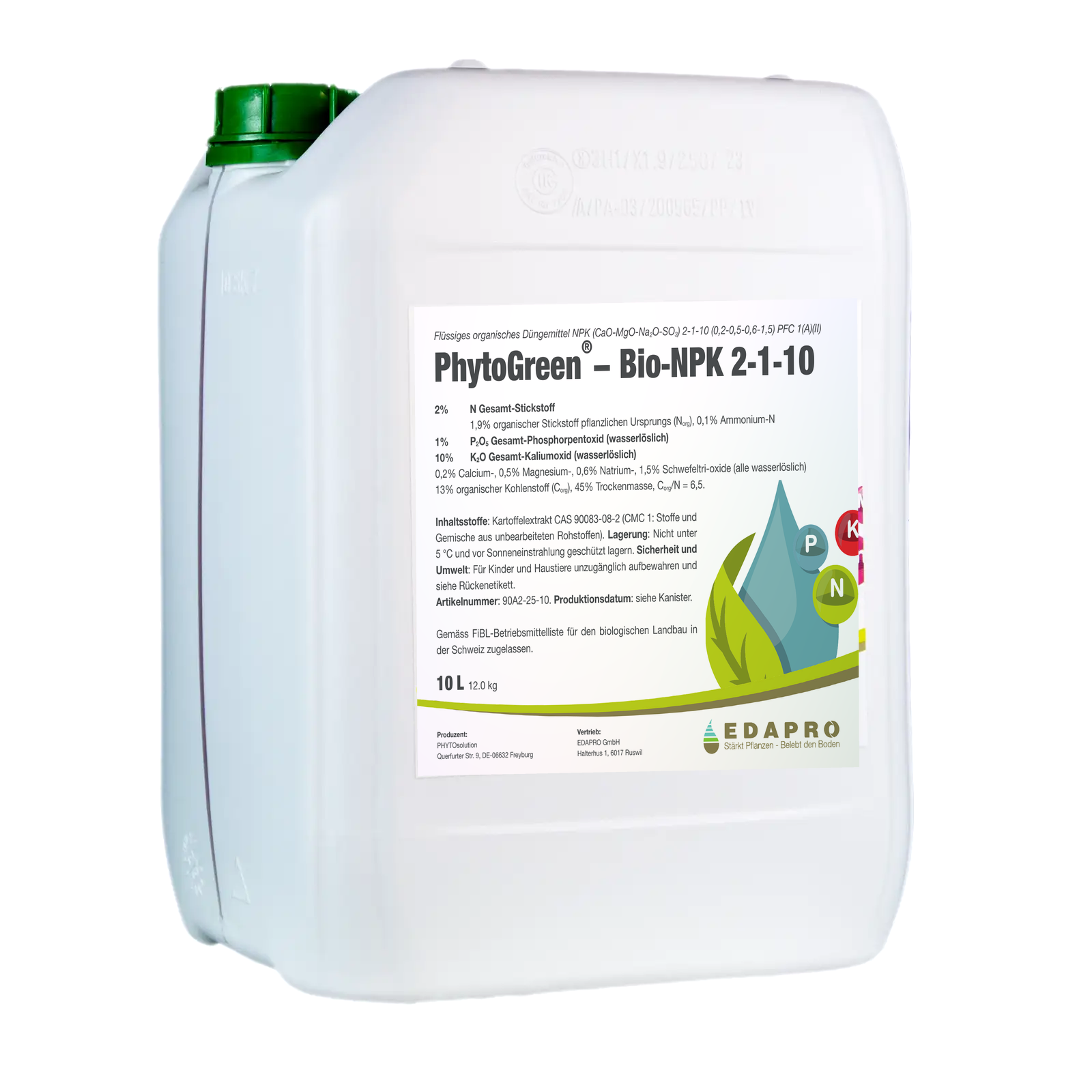
Organic NPK fertilizer, liquid, with a high potassium content from purely plant-based raw materials. Through fermentation and enzymatic hydrolysis, a high-quality, potassium-focused complete fertilizer is created, which also provides water-soluble trace elements. Suitable for the fruiting phase of the crop.
The application of Organic NPK 2-1-10 can be combined with other foliar fertilizers and compost tea.
Listed as an operating material by the Research Institute of Organic Agriculture (FiBL).
Content: 10 liters
On request: 200 liters, 1000 liters
Through fermentation and enzymatic hydrolysis of various plant-based raw materials from the food industry, high-quality NPK fertilizer solutions are created with directly plant-available organic nitrogen, very little phosphorus, and high potassium for the fruiting phase.
Application and Application Rates
| Crop | Application Rate |
|---|---|
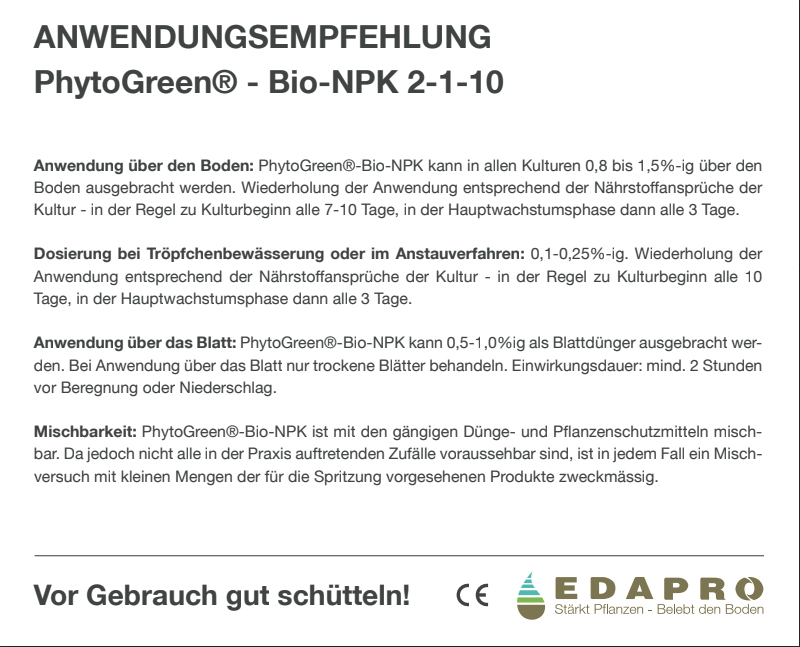
| Soil Application | PhytoGreen®-Organic NPK can be applied to all crops at 0.8 to 1.5% via the soil. Repeat application according to the crop’s nutrient requirements – usually every 3-7 days from the start of flowering. |
| Dosage for Drip Irrigation or Submersion Method | 0.1-0.25%. Repeat application according to the crop’s nutrient requirements – usually every 3-7 days from the start of flowering. |
| Foliar Application | PhytoGreen®-Organic NPK can be applied as a foliar fertilizer at 0.5-1.0%. For foliar application, only treat dry leaves. Exposure time: at least 2 hours before irrigation or precipitation. |
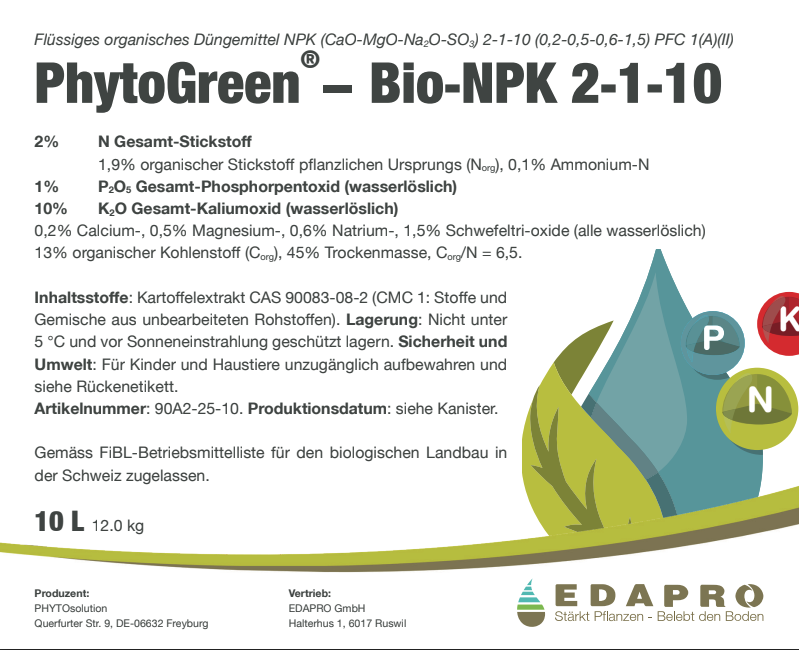
| Nutrient | NPK 2-1-10 |
|---|---|
| Nitrogen (N) | 2% (25 g/l) |
| Phosphorus (P2O5) | 1% (12 g/l) |
| Potassium (K2O) | 10% (125 g/l) |
| Calcium (Ca) | 0.14% (1.7 g/l) |
| Magnesium (Mg) | 0.3% (3.7 g/l) |
| Sulfur (S) | 0.6% (7.4 g/l) |
| Boron (B) | approx. 5 mg/l |
| Iron (Fe) | approx. 30 mg/l |
| Copper (Cu) | approx. 4 mg/l |
| Manganese (Mn) | approx. 10 mg/l |
| Zinc (Zn) | approx. 20 mg/l |
| Organic Matter | 22% |
| Organic Carbon | 13% |
| pH Value | 5.1 |
| Dry Matter | 46% w/w |
| Density | 1.19 kg/l |
Many crops, both in greenhouses and outdoors, have a high nitrogen requirement in spring. This is due to strong vegetative growth combined with low nitrogen availability from the soil, as the soil is still cool and microbial activity remains limited. If too much potassium is applied during this phase, it can inhibit the uptake of calcium and magnesium, which in turn promotes insect damage.
As soon as the crop transitions into fruiting, the nitrogen requirement decreases. At the same time, nitrogen availability from the soil improves due to higher temperatures, a more developed root system, and increased release of root exudates. However, during this phase, the potassium requirement significantly increases, as potassium is central to fruit set, fruit quality, and transport processes. To keep plants healthy, nitrogen input should not be too high at this point.
For this reason, switching to Organic NPK 2-1-10 is advisable during the fruiting phase.
→ Phosphorus is generally sufficiently available in active soil with good mycorrhization.
Additional Information
| Weight | 11 kg |
|---|---|
| Quantity | 10 Liters, 200 Liters, 1000 Liters |
Related products

Organic Liquid Calcium 10 liters
Liquid calcium fertilizer, 8.0% CaO (water-soluble calcium oxide) for rapid uptake via the leaf. To improve assimilation performance, for higher yields: 4–8 l/ha or
2% w/v (2 l/100 l water) for foliar sprays.
The application of Bio NPK 2-1-10 can be combined with other foliar fertilizers and compost tea. (except sulfur and magnesium sulfate)
Listed as an input by the Research Institute of Organic Agriculture (FiBL).

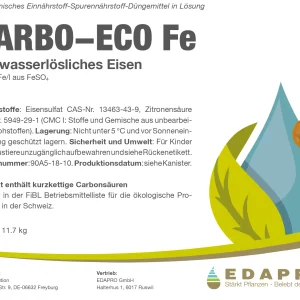
Iron Foliar Fertilizer Carbo-Eco-Fe 10 Liters
Iron fertilizer solution (from FeSO4) with 5% water-soluble iron (Fe). Corrects and prevents iron deficiency in all crops. Rapid absorption and processing within the plant. Corrects and prevents iron deficiency in all crops.
Listed as an input with the Research Institute of Organic Agriculture (FiBL).
Content: 10 liters
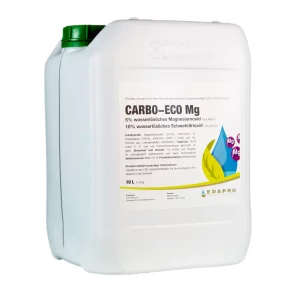
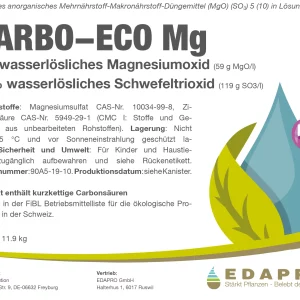
Magnesium leaf fertiliser Carbo-Eco-Mg 10 litres
Magnesium fertiliser solution with 5% water-soluble magnesium oxide (MgO) and 10% water-soluble sulphuric anhydride (SO3). Corrects and prevents magnesium deficiency in all crops. Direct absorption and processing in the plant.
Registered as a farm input with the Research Institute of Organic Agriculture (FiBL) (expected to be listed from September 2023).
Contents: 10 litres


PhytoGreen® – Organic NPK 7-3-2
Organic NPK fertilizer, liquid, with organically bound nitrogen from purely plant-based raw materials. Fermentation creates a high-quality fertilizer with water-soluble nutrients. Phosphorus is also present in a water-soluble form that is directly
available to plants.
Application of Organic NPK 7-3-2 can be combined with other foliar fertilizers and compost tea.
Listed as an input by the Research Institute of Organic Agriculture (FiBL).
Contents: 10 L
On request: 200 L, 1,000 L